An ON/OFF Valve has two states of operation either open or close. It is identical in operation to an electric switch. In other words, the on/off valve is the fluid equivalent of an electrical switch. It either allows the fluid to pass or block through it. A tap to fill an overhead tank is the best example of an on-off valve. The tap has two modes of operation either fully open or fully closed.
These valves are often used for:
- Routing process fluid to different locations
- Starting and stopping batch processes
- Engaging automated safety functions
What is ON/OFF Valve ?
An ON/OFF valve is a type of valve used to completely start or stop the flow of liquids, gases, or steam in a piping system. These valves are commonly used in industrial processes where reliable isolation and shut-off of fluid flow are required.
Types of ON/OFF Valves
The following are the common types of ON/OFF valves:
- Ball Valve: Uses a spherical ball with a bore through its center to start or stop fluid flow.
- Butterfly Valve: Uses a rotating disc to control the flow of liquids, gases, or steam.
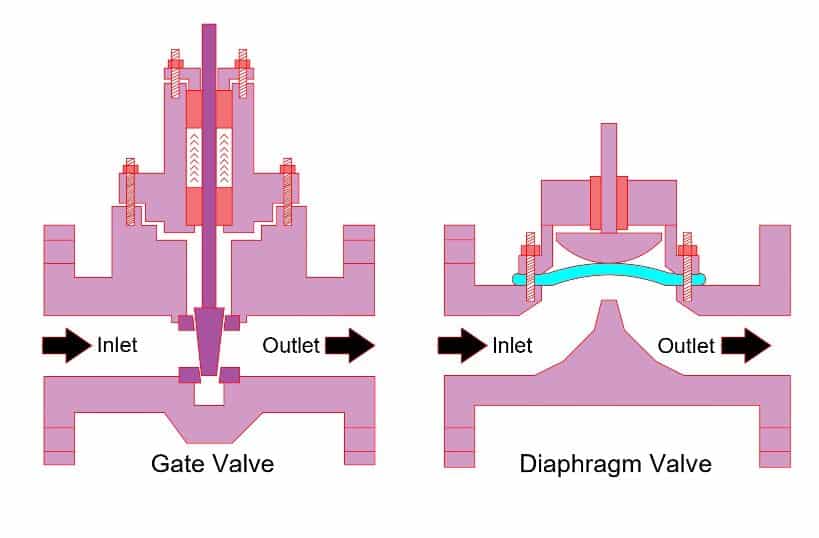
- Gate Valve: Uses a gate or wedge-shaped disc that moves up and down to open or close the flow path.
- Globe Valve: Uses a movable disc and stationary seat to shut off fluid flow and can also be used for throttling applications.
- Plug Valve: Uses a cylindrical or tapered plug with a passage through it to allow or block fluid flow.
These valves operate in two modes either fully open or fully closed. There is no intermittent stage of valve opening.
ON/OFF Valve Characteristics
A large ON/OFF valve provides a nearly unobstructed flow path when it is in the fully open position. This minimizes pressure loss and allows fluid to pass through the valve with minimal restriction.
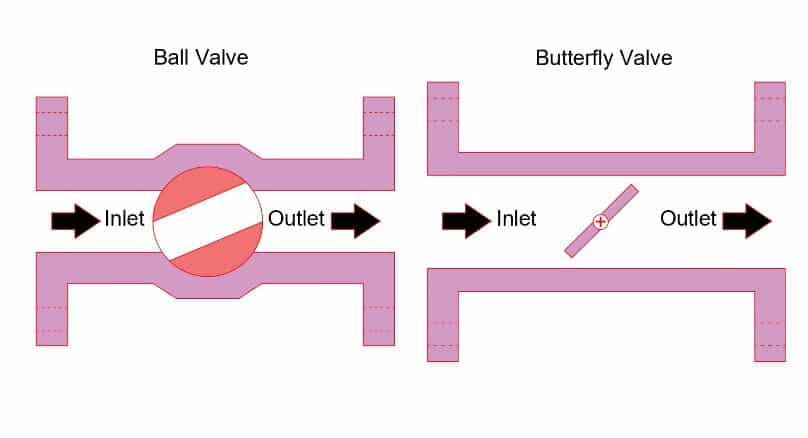
All the on/off types of valves have almost identical characteristics. Only the difference between various on/off valves is the difference of the rotating element. The ball valve has a spherical ball as its rotating element. But, the plug valve has a truncated cone as the rotary element. The conical shape of a plug valve keeps the valve tightly closed in order to have exceptional sealing.
Most ON/OFF valves are designed to provide tight shut-off when in the closed position. They also offer low resistaance to flow when fully open, allowing fluid to pass through the valve with minimal pressure loss.
The choice of an ON/OFF valve depends on factors such as the type of fluid, operating pressure, temperature, and sealing requirements of the application.
ON/OFF Valve Sealing
The following ON/OFF valve diagram shows the cut-away view of a hand-actuated ball valve in three different positions. The diagram illustrates the inner workings of a ball valve and demonstrates how fluid flow is controlled by the position of the ball.
ON/OFF Valve Diagram
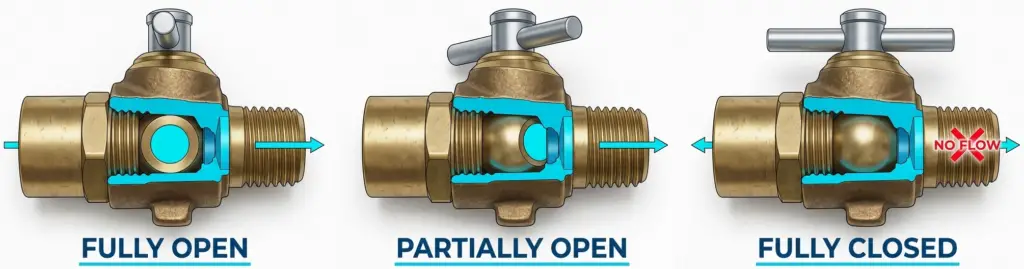
The left-hand image shows the valve in a closed position The valve prevents fluid from passing through it.
The right-hand image depicts the open position of the valve that allows the fluid to flow through it. In this condition, the bore axis is perpendicular to view. The middle image shows the valve in a partially open condition.
How Does an ON/OFF Valve Work?
An ON/OFF valve operates by either allowing fluid to flow freely through the pipeline or completely blocking the flow. The valve remains in one of two positions: fully open or fully closed. Unlike a control valve, it is not designed to regulate or throttle the flow rate.
The animation below demonstrates the opening and closing action of an ON/OFF valve. Notice how the valve handle rotates by 90° to change the valve from the open position to the closed position.
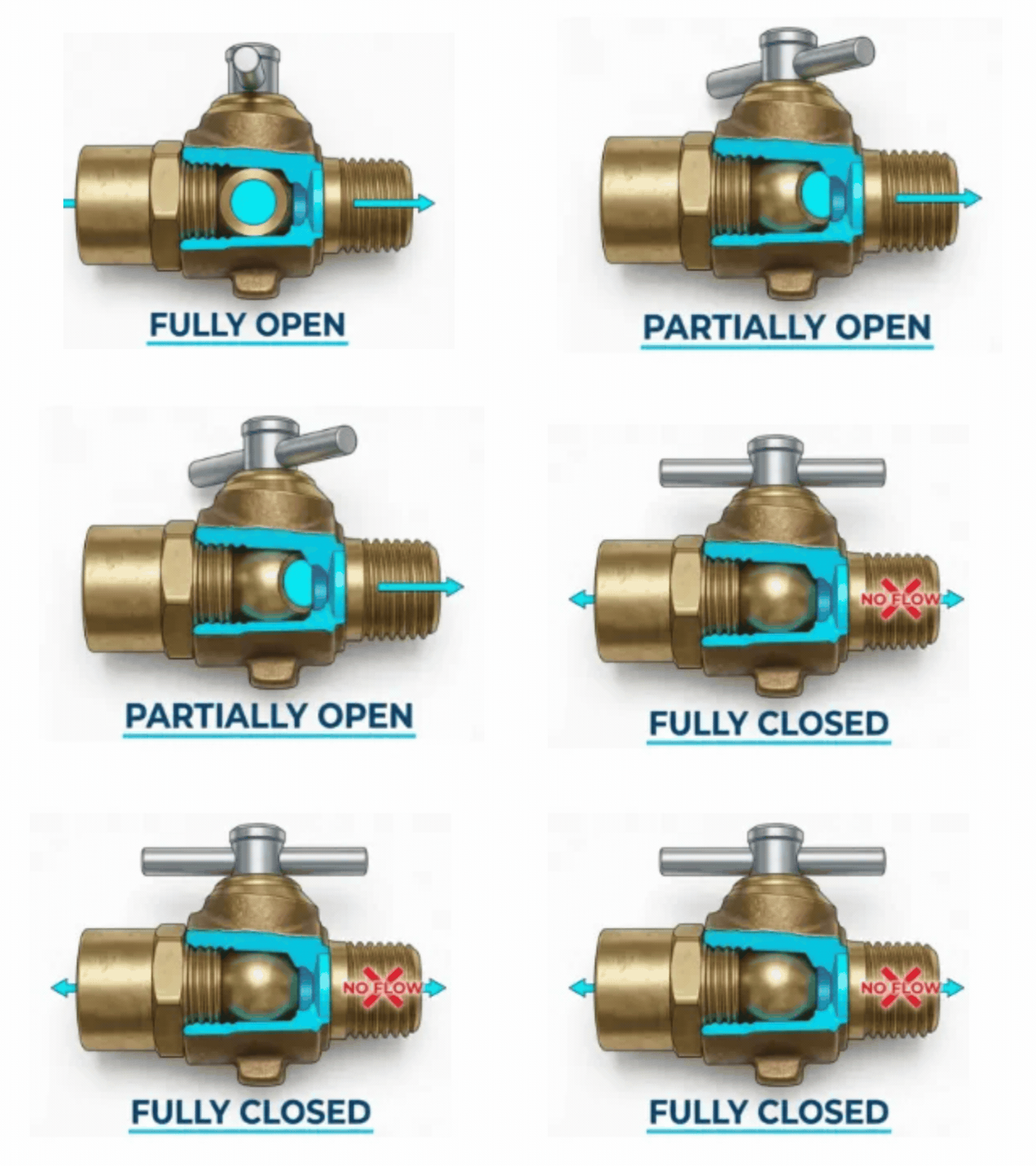
The opening and closing action may be performed manually using a hand lever or wheel, or automatically using pneumatic, hydraulic, or electric actuators. In automated systems, ON/OFF valves are often connected to a control system that sends commands to open or close the valve based on process requirements.
ON/OFF Valve vs Control Valve
| Parameter | ON/OFF Valve | Control Valve |
| Function | Starts or stops flow | Regulates flow |
| Valve Position | Fully open or fully closed | Can operate at intermediate positions |
| Flow Control | Not suitable | Designed for precise control |
| Automation | Commonly used | Commonly used |
| Typical Examples | Ball valve, Gate valve, Butterfly valve | Globe valve, Control globe valve |
ON/OFF Valve: Quick Selection & Troubleshooting
| Scenario | Recommended Valve Type | Why? |
| Fast Cycle/Quick Shut-off | Ball Valve | 90-degree turn provides instantaneous operation. |
| Low-Pressure Drop Requirement | Full Bore Ball Valve | Minimal restriction when fully open. |
| High Sealing Performance | Plug Valve | Conical shape ensures a tight shut-off. |
| Common Troubleshooting Issue | Check for… | Action |
| Frequent Leakage at Seats | Valve wear | Inspect seat material (e.g., PTFE, Metal) for degradation. |
| Water Hammer Effect | Closing speed | Consider slower-acting actuators or soft-closing valves. |
| Sticking/High Torque | Debris/Scale buildup | Clean the ball/plug surface and check actuator pressure. |
Advantages of ON/OFF Valves
The following are the major advantages of ON/OFF valves:
- Simple design and operation.
- Quick opening and closing action.
- Reliable shut-off capability.
- Low maintenance requirements.
- Suitable for automated operation.
- Available in a wide range of sizes and materials.
- Provides minimal pressure drop when fully open.
Disadvantages of ON/OFF Valves
Despite their benefits, ON/OFF valves have some limitations:
- Cannot accurately control flow rate.
- Not suitable for throttling applications.
- Frequent partial opening may damage valve seats.
- Some valve types may generate water hammer during rapid closure.
Applications of ON/OFF Valves
ON/OFF valves are widely used in industrial and commercial systems for isolation purposes. Common applications include:
- Water distribution systems.
- Oil and gas pipelines.
- Chemical processing plants.
- Power generation facilities.
- HVAC systems.
- Compressed air systems.
- Fire protection systems.
- Automated process shutdown systems.
Conclusion
An ON/OFF valve is a simple yet essential component used to completely start or stop the flow of liquids, gases, and steam in industrial piping systems. Unlike control valves, which regulate flow, ON/OFF valves operate in only two positions—fully open or fully closed—making them ideal for isolation and shut-off applications.
Their simple construction, reliable sealing performance, quick operation, and low maintenance requirements make them a preferred choice in industries such as water treatment, oil and gas, chemical processing, power generation, and HVAC systems. Selecting the appropriate ON/OFF valve depends on factors such as fluid type, operating conditions, and sealing requirements to ensure safe and efficient system operation.
Frequently Asked Questions (FAQs)
The primary purpose of an ON/OFF valve is to completely start or stop the flow of a fluid through a pipeline.
Yes. A ball valve is one of the most commonly used ON/OFF valves because it provides quick operation and excellent sealing performance.
An ON/OFF valve is mainly designed for isolation service. Although some valves can operate in a partially open position, they are generally not intended for precise flow control.
ON/OFF valves are used in water treatment plants, power plants, oil and gas facilities, chemical industries, HVAC systems, and many other industrial applications.
Read Next:
- Control Valve Cavitation and Flashing
- What is Spool Valve? Types, Configuration, and Applications
- Direct Acting Control Valves & Reverse Acting Control Valves
- Single Seated and Double Seated Valves
- What is an Unloading Valve?-Types, Principle
- What is a Sequence Valve?
- Double Block and Bleed Valve System
- What is an Air Valve? Purpose, Types, Advantages