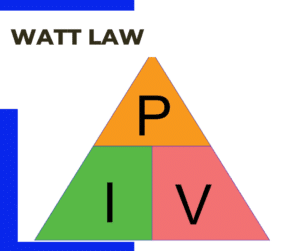
Watts Law: What is it? Formula, Examples & Watt’s Law Triangle
Watts’s law and Ohm’s law describe the relationship between a circuit’s voltage, current, resistance, and power consumption. We are going to discuss Watt’s law in
Watts’s law and Ohm’s law describe the relationship between a circuit’s voltage, current, resistance, and power consumption. We are going to discuss Watt’s law in
This article describes the major differences between an instrument transformer and a power transformer. A transformer is electrical equipment used for stepping up or stepping down the
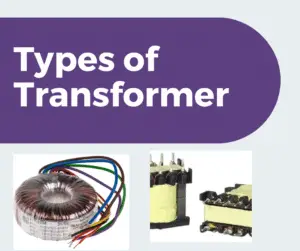
An electrical transformer is a static electrical device that transfers electrical energy by increasing or decreasing AC voltage and current without changing its frequency. It
This article describes the important differences between electrical devices and electronic devices. Let us first know a bit about electrical and electronic devices. Though both
This article describes the most prominent differences between the star and delta connection and their basic introduction. Electric circuits can be divided into the following
A circuit is described as a network loop through which an electric current or magnetic field passes. The main circuit components include – the source,
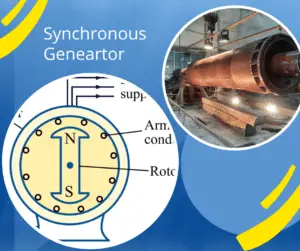
This article describes the construction and working principle of a synchronous generator (also called an alternator). So, let us start with the basic introduction of
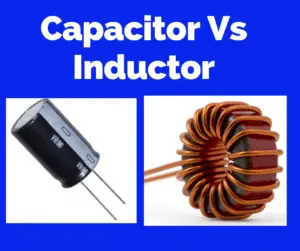
This article describes the prominent differences between a capacitor and an inductor that set them apart based on several factors. Capacitor and Inductor are two
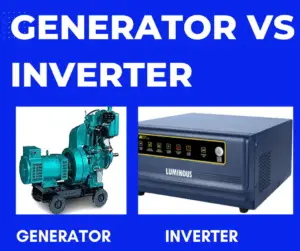
A generator is an electromechanical machine that converts mechanical energy into electrical energy. While an inverter is an electronic device that converts direct current (DC)
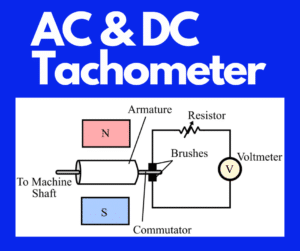
An electrical Tachometer is an electromechanical device that produces an output voltage proportional to the speed. In this article, we will discuss the AC tachometer