- Electric Meter Definition: Measures electrical energy consumption in kilowatt-hours (kWh) for accurate billing, monitoring, and energy management in homes, commercial, and industrial settings.
- Analog (Electromechanical) Meter: Uses electromagnetic coils to rotate a disc proportional to energy consumption. Durable and simple but less accurate with no real-time monitoring.
- Digital (Electronic) Meter: Measures voltage and current with AC sensors and microprocessors, converts data digitally, stores historical readings, and supports remote monitoring with high accuracy.
- Smart Meter: Advanced digital meter with two-way communication, real-time monitoring, TOU pricing, demand response, and smart grid integration for energy efficiency and automated billing.
- Prepaid Electric Meter: Allows users to pay for electricity in advance, offering budget control, reduced billing disputes, and real-time consumption tracking, commonly used in rental properties and developing regions.
- Single-Phase vs Three-Phase Meters: Single-phase meters for homes/small offices; three-phase meters for industrial/high-power applications, ensuring balanced energy measurement across phases.
- Importance of Electric Meters: Enable accurate billing, energy monitoring, peak load management, tariff implementation, regulatory compliance, and infrastructure planning for utilities.
- Future Trends: Incorporate AI, IoT, blockchain, 5G, and advanced analytics, transforming meters from billing devices into intelligent energy management tools for smart grids and sustainable energy systems.
Electric meters play a vital role in how electricity is monitored, billed, and managed across modern power systems. From controlling energy costs in homes to enabling smart grids, renewable integration, and demand-response programs, electric meters have evolved into essential tools for efficient and sustainable energy use. Understanding how they work and the types available helps consumers and utilities make informed energy decisions.
What Is an Electric Meter?
An electric meter, also known as an electricity meter, electric power meter, energy meter, or kilowatt-hour (kWh) meter, is a device used to measure the amount of electrical energy consumed over a specific period. Electric meters are installed at residential, commercial, and industrial premises to record electricity usage for billing, monitoring, and energy management purposes.
Electric utility companies rely on electric meters to accurately measure energy consumption, typically expressed in kilowatt-hours (kWh). One kilowatt-hour represents the energy used by a 1-kilowatt load operating for one hour.
Modern electric meters go far beyond billing—they play a crucial role in smart grids, demand management, renewable energy integration, and energy efficiency programs.
Units of Energy Measurement in an Electric Meter
The most commonly used unit of measurement in an energy meter is the kilowatt-hour (kWh).
- 1 kWh = 1,000 watts used for 1 hour
- 1 kWh = 3,600,000 joules
Electricity energy meters may also record:
- Voltage (V)
- Current (A)
- Power (kW)
- Power factor (PF)
- Maximum demand (kVA)
These measurements help utilities and consumers understand energy usage patterns and optimize electricity consumption.
Types of Electric Meters
Electric meters are classified based on technology, application, and functionality. The most common types include:
1. Analog (Electromechanical) Electric Meter
An analog electric meter uses electromagnetic principles to measure energy consumption.
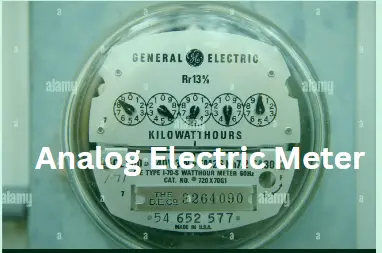
An analog electric meter, also known as an electromechanical electricity meter, measures electrical energy consumption using electromagnetic principles. These traditional energy meters were widely used in residential and industrial applications before the adoption of digital and smart meters.
Working Principle
An analog electric meter contains two conductor coils that generate magnetic fields. One coil produces a magnetic field proportional to the voltage, while the other produces a magnetic field proportional to the current flowing through the circuit.
The interaction of these magnetic fields causes a thin aluminum disc to rotate at a controlled speed. The speed of rotation is directly proportional to the electrical power being consumed. As the disc rotates, it drives a mechanical gear and dial system that records the total electrical energy consumed in kilowatt-hours (kWh).
Advantages
- Simple and robust design
- Long operational lifespan
- Reliable under stable operating conditions
Limitations
- Lower measurement accuracy compared to digital meters
- Requires manual meter reading
- No real-time energy monitoring or data storage
- Not compatible with smart grid and demand-response systems
2. Digital (Electronic) Electric Meter
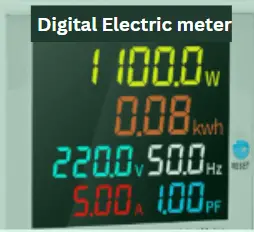
A digital electric meter, also known as an electronic electricity meter, measures electrical energy using electronic sensors and microprocessors instead of mechanical components. These meters are widely used in modern residential, commercial, and light industrial applications due to their accuracy and reliability.
Working Principle and Key Features
Digital electric meters use AC (alternating current) sensors to continuously measure voltage and current. The measured analog signals are converted into digital data through an analog-to-digital converter (ADC). A built-in microprocessor processes this data to calculate electrical energy consumption, which is displayed in a numeric digital format.
In addition to real-time readings, digital meters can store historical energy consumption data. Many models can be interfaced with computers or remote monitoring systems, allowing meter readings to be accessed from distant locations.
Advantages
- Higher accuracy compared to analog energy meters
- No moving parts, resulting in lower maintenance requirements
- Digital display for easy reading
- Tamper detection and improved security
- Supports remote meter reading and data retrieval
Digital electric meters provide a reliable transition between traditional electromechanical meters and advanced smart meters, making them a standard choice for modern electricity metering systems.
3. Smart Electric Meter
A smart electric meter is an advanced form of digital electricity meter equipped with two-way communication capabilities. Unlike traditional meters, smart meters provide detailed, real-time insights into electricity consumption and actively support smart grid operation and energy management.
Features and Capabilities
Smart electric meters deliver real-time or near real-time energy readings, allowing both consumers and utility companies to monitor electricity usage accurately. These meters support remote meter reading and automated billing, eliminating the need for manual data collection.
Smart meters also offer power outage detection, power quality monitoring, and alerts, enabling faster fault identification and restoration. Through time-of-use (TOU) and dynamic pricing, electricity tariffs can vary based on peak and off-peak hours or seasonal demand, encouraging efficient energy usage.
Advanced smart electric meters enable demand response and load shedding, where electricity consumption is automatically reduced during peak demand periods to maintain grid stability.
Smart Meter Technology and Energy Management
Smart meters communicate consumption data to utility providers using Advanced Metering Infrastructure (AMI). This improves grid efficiency, reduces energy losses, and supports predictive maintenance.
Many smart meters utilize non-intrusive load monitoring (NILM) technology to analyze household energy consumption patterns. This allows utilities to estimate the number, type, and energy usage of individual appliances without installing separate monitoring devices, making smart meters valuable tools for energy audits and consumption surveys.
4. Prepaid Electric Meter
A prepaid electric meter is a type of electricity meter that allows consumers to pay for electricity in advance before using it. Instead of receiving monthly bills, users purchase electricity credits through recharge cards, mobile apps, online portals, or vending systems, and the meter deducts energy consumption in real time.
How Prepaid Electric Meters Work
Prepaid electric meters operate by measuring electricity usage in kilowatt-hours (kWh) and subtracting the corresponding amount from the prepaid balance. When the credit reaches a low level, the meter provides alerts or warnings, and electricity supply can be automatically disconnected once the balance is exhausted. Power is restored immediately after recharging.
Benefits of Prepaid Electric Meters
- Better budget control: Consumers can manage electricity expenses and avoid unexpected bills
- Reduced billing disputes: Prepayment eliminates estimated billing and meter-reading errors
- Improved payment collection: Utilities receive payment upfront, reducing revenue losses
- Energy awareness: Real-time balance tracking encourages energy-efficient behavior
- Convenience: Easy recharging via digital platforms
Applications of Prepaid Electric Meters
Prepaid electric meters are widely used in:
- Rental properties and student housing
- Hostels, dormitories, and temporary accommodations
- Developing regions with limited billing infrastructure
- Commercial spaces with multiple tenants
Prepaid meters are often integrated with smart metering systems, combining advance payment with features such as remote monitoring, tamper detection, and data analytics.
5. Single-Phase and Three-Phase Electric Meters
Electric meters are also classified based on the type of electrical supply they measure, primarily as single-phase and three-phase electric meters. The choice of meter depends on load requirements, voltage levels, and application type.
Single-Phase Electric Meter
A single-phase electric meter is commonly used in residential buildings, small offices, and light commercial establishments where power demand is relatively low.
Key Characteristics:
- Operates on a single-phase AC supply
- Typically used for loads such as lighting, household appliances, and small equipment
- Measures energy consumption in kilowatt-hours (kWh)
- Compact, cost-effective, and easy to install
Single-phase meters are suitable where electricity consumption does not require high power or heavy machinery.
Three-Phase Electric Meter
A three-phase electric meter is designed for industrial facilities and high-power commercial applications where large electrical loads are involved.
Key Characteristics
- Measures energy across three separate phases
- Supports higher power loads and heavy machinery
- Ensures accurate measurement of total energy consumption
- Helps maintain balanced load distribution across phases
Three-phase energy meters are essential for factories, data centers, shopping malls, hospitals, and manufacturing plants where efficient power distribution and load balancing are critical.
Importance of Three-Phase Metering
Three-phase electric meters help utilities and facility managers:
- Monitor phase-wise energy consumption
- Detect load imbalance and power quality issues
- Improve system efficiency and equipment lifespan
- Prevent overheating and electrical losses
Both single-phase and three-phase energy meters are available in analog, digital, and smart meter configurations, making them adaptable to modern power systems and smart grid environments.
Comparison of Electric Meter Types
| Feature | Analog Meter | Digital Meter | Smart Meter |
| Accuracy | Low | High | Very High |
| Real-Time Monitoring | No | No | Yes |
| Remote Reading | No | Limited | Yes |
| Smart Grid Ready | No | No | Yes |
| Time-of-Use (TOU) Pricing | No | Limited | Yes |
Importance of Electric Meters
- Accurate Billing: Measures electricity consumption in kilowatt-hours (kWh), ensuring consumers are billed only for the energy they use.
- Energy Monitoring & Conservation: Helps users track electricity usage, identify high-energy appliances, and adopt energy-saving practices.
- Grid Planning & Resource Allocation: Provides utilities with load data to optimize power generation, maintenance scheduling, and resource distribution.
- Load Profiling & Demand–Supply Balance: Supports analysis of consumer load patterns, helping utilities balance electricity supply and demand efficiently.
- Peak Load Management & Grid Efficiency: Identifies high-demand periods, enabling infrastructure upgrades, load management, and improved grid performance.
- Tariff Implementation & Dynamic Pricing: Enables time-of-use (TOU) tariffs and dynamic pricing, encouraging off-peak energy consumption.
- Regulatory Compliance: Ensures legal compliance with energy measurement and billing standards.
- Infrastructure Investment Planning: Guides utilities in planning new generation and distribution projects based on recorded consumption trends.
Electric Meter Demand Measurement and Time-of-Use Pricing
Electric meters can measure the maximum power usage during a specific time period, known as demand. This data helps utilities manage peak load conditions and improve grid efficiency.
Many modern electricity meters support time-of-use (TOU) metering, which allows utility companies to apply different electricity rates based on consumption during peak and off-peak hours. During high-demand periods, electricity prices are higher, while lower rates apply during off-peak times.
Advanced and smart energy meters also enable demand response programs, where electricity consumption can be automatically reduced during peak periods. This process, known as demand response load shedding, helps prevent grid overload, reduce energy costs, and support reliable power delivery.
Electric Meters and Smart Grids
Electric meters are a foundational component of smart grid technology.
Smart meters:
- Enable two-way communication
- Improve grid reliability
- Support renewable energy integration
- Reduce power outages and losses
Electric Meters and Renewable Energy (Net Metering)
Modern electric meters support net metering, allowing solar and wind energy users to:
- Export excess energy to the grid
- Earn credits on electricity bills
- Track bi-directional energy flow
This makes electric meters critical for solar power systems and sustainable energy adoption.
Electric Meters for Electric Vehicle (EV) Charging
With the rise of electric vehicles, electric meters help:
- Monitor EV charging energy consumption
- Implement EV-specific tariffs
- Manage peak loads efficiently
Smart meters play a key role in EV charging infrastructure.
Future Trends in Electric Meter Technology
The future of electric meters is driven by advanced technologies such as:
- AI-based load forecasting
- IoT-enabled energy monitoring
- Blockchain-based energy trading
- 5G-enabled smart grids
- Advanced power quality analytics
Electric meters are evolving into intelligent energy management devices rather than simple billing instruments.
Conclusion
An electric meter is a critical device for measuring, monitoring, and managing electrical energy consumption. From traditional analog meters to advanced smart electric meters, these devices support accurate billing, energy efficiency, renewable integration, and smart grid development.
As energy systems become more digital and decentralized, modern electric meters will continue to play a central role in sustainable, efficient, and intelligent power management.
Read Next:
- What is Smart Sensor? Working & Its Applications
- What is the Unit Of Energy? – SI Unit, CGS, MKS, Conversion Table
- Electrical Engineering Companies in UK
- Magnetic Flow Meter- Its Working, Uses
- Power Transformer Explosion: Why it Happens & What to do?
- Calculation of Multiplication Factor of Energy Meter
- Electrodynamometer Wattmeter
- What is Creeping in Energy Meter?- Definition & Prevention