Explain Why diode is called Unidirectional Device?
A diode is called a unidirectional device because it allows current to flow in only one direction while blocking it in the opposite direction. This
A diode is called a unidirectional device because it allows current to flow in only one direction while blocking it in the opposite direction. This
The main difference between an LED (Light Emitting Diode) and a Photodiode is that an LED emits light when forward biased, whereas a Photodiode detects
The main difference between a Zener diode and a Schottky diode is that a Zener diode regulates voltage in reverse bias, while a Schottky diode
The key difference between a PN junction diode and a Zener diode lies in their current flow behavior. A PN junction diode permits current flow
Discover the key differences between NPN and PNP transistors, including their structure, working principle, current flow, and applications. Learn why NPN transistors are preferred in
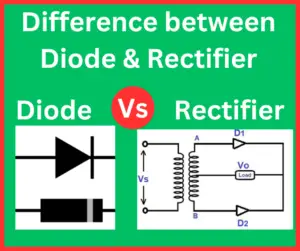
A diode is a semiconductor device that permits current flow in only one direction, while a rectifier is a device that converts alternating current (AC)
TV antenna on the red roof. television antenna on the roof with a blue sky. Brick pipe house and media transmitter, radio, television Are you
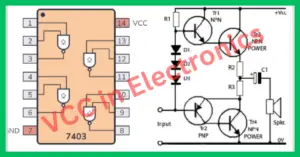
In electronics, the full form of VCC is “Voltage at the Common Collector.” It is a term commonly used to refer to the power supply
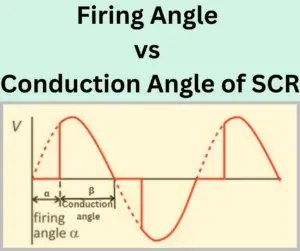
Discover the key differences between the firing angle and conduction angle of an SCR (Silicon Controlled Rectifier). Learn how these parameters influence the control and
The key difference between silicon and germanium diodes is that silicon diodes have a higher threshold voltage (approximately 0.7 volts) and superior thermal stability, whereas