Difference Between High, Medium and Low Voltage Transformers
Difference Between High, Medium, and Low Voltage Transformers – A step-down voltage transformer reduces a higher level voltage to a lower level. A step-up voltage
Transformer is the static piece of equipment used for step up and step down the voltage for economic transmission and utilization of electrical power.
In this section we are adding all the technical articles related to transformer like step up transformer, step down transformer, ideal transformer, efficiency and losses, regulation, percentage impedance.
We will also discuss about parallel operation of transformers, copper loss and no load losses and its calculation, all types of routine and type tests, converter duty transformer,dry type transformer, k factor of transformer, maintenance of oil filled and dry type transformer, transformer protection equipment like buccoltz relay, PRD and oil and winding temperature measurement etc.
We will also discuss about the open and short circuit test on transformer.
Difference Between High, Medium, and Low Voltage Transformers – A step-down voltage transformer reduces a higher level voltage to a lower level. A step-up voltage
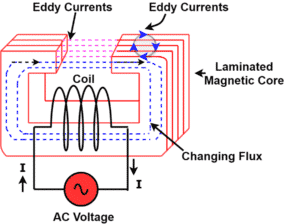
Eddy Current Loss When magnetic material comes under a magnetic field generated by alternating current, an emf induce in the core material according to Faraday’s
In this article, we will discuss the difference between copper loss and iron loss of the transformer. what are copper loss and iron loss and
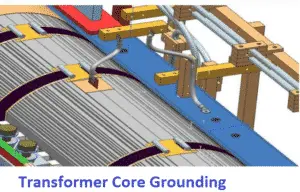
Transformer is a static piece of equipment and it has primary and secondary winding. The low voltage winding has few turns of wire wound around
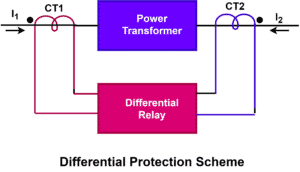
What is Differential Protection? Differential protection is used for detecting the fault in a particular zone. Therefore, we call it also unit or zone protection.
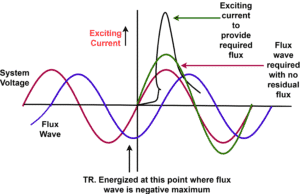
What is Exciting current? The exciting current in the transformer produces the magnetic flux in the core. When energizing transformer at no load, transformer draws
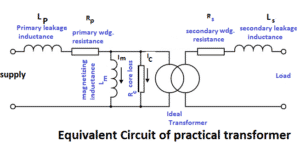
The no-load current of a transformer is the vector sum of the exciting current and core loss current of the transformer. Why Losses in a
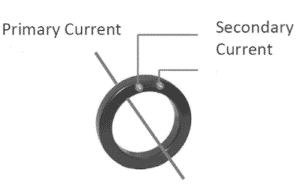
The metering class current transformer is used for metering the energy for revenue purposes. Therefore, the metering class current transformer must be as accurate as
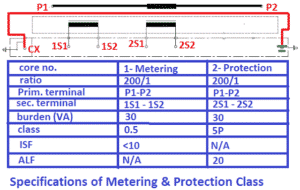
Definition- The accuracy limit factor (ALF) of a current transformer (CT) is a parameter that indicates the highest multiple of the rated current at which
CT or PT functions on the principle of electromagnetic induction. The electrical energy is first converted into magnetic energy and again the magnetic energy is