Type 1 and Type 2 coordination defines the short-circuit performance of motor starter components. Set out by the IEC 60947-4-1 standard, these levels describe the resilience of a motor controller following a short-circuit fault.
To achieve this performance, the combination of starter components—including fuses, contactors, and protection devices—must meet specific criteria. Below, we discuss the critical differences between Type 1 and Type 2 coordination.
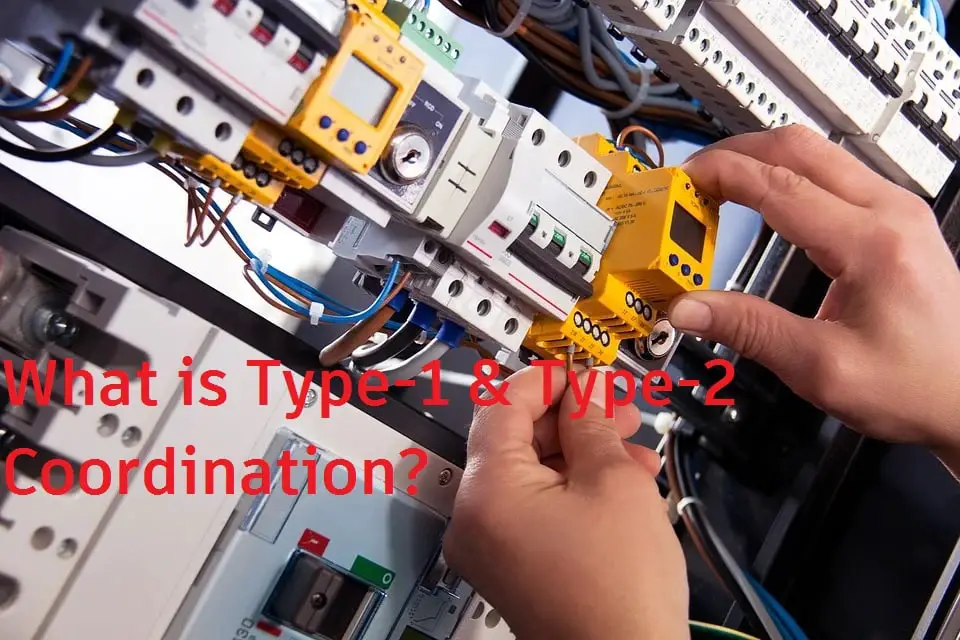
What is Type 1 Coordination?
Type 1 coordination demands that the motor starter causes no damage to the electrical installation or personnel during a short-circuit. However, after the fault is cleared, the motor starter is no longer appropriate for use without repairing or replacing its components.
During a short-circuit fault in a Type 1 setup:
- The contactor contacts may weld.
- The overload relay may sustain permanent damage.
- The starter protects the equipment and human life, but it is sacrificed in the process.
Example: Consider a motor starter under high fault conditions. The massive current heats the contactor contacts rapidly. When the overload relay trips, the contacts may weld together. Consequently, the starter cannot be reused immediately, leading to substantial downtime and production loss. This makes Type 1 coordination less economic for high-fault-level industrial installations.
What is Type 2 coordination?
Type 2 coordination solves the damage problems seen in Type 1. The coordination between the tripping device and the fault isolation device ensures that no parts of the starter are damaged during short-circuit interruption.
Key characteristics of Type 2 include:
- No Damage: The starter remains functional and can be used without extensive repairs.
- Minimal Downtime: The motor can be restarted almost immediately after clearing the fault.
- Separable Contacts: While the standard permits “light welding” of contacts, they must be easily separable (e.g., with a screwdriver) for continued use.
In type-2 motor starter, the motor protection relay senses the fault current. When the current exceeds above the set point, the relay issues trip command to the contactor that isolates the faulty section in no time. The relay current sensing is very fast, and it trips the contactor before reaching the prospective fault current to peak value. Thus, the type-2 coordination ensure no risk and no damage to motor controller for downstream faults.
What Starter Parts are Involved in Type 2?
To achieve Type 2 status, the thermal overload relay, contactor, and circuit breaker combination must be manufacturer-certified as a tested pair. Always refer to the manufacturer’s selection charts (e.g., Schneider, ABB, or Siemens) for verified Type 2 combinations.
In industrial applications, the following components typically involves:
- Overload Protection: A thermal or electronic overload relay.
- Short Circuit Protection: A molded case circuit breaker (MCCB) or motor protection circuit breaker (MPCB).
- Switching Device: A contactor rated specifically for the coordination type.
Quick Comparison Table: Type 1 vs. Type 2
| Feature | Type 1 Coordination | Type 2 Coordination |
| Component Damage | Likely (Welded contacts/damaged relay) | None (Safe for further service) |
| System Recovery | Repair or Replacement required | Immediate Restart possible |
| Downtime | Substantial / High | Minimal / Low |
| Maintenance Cost | Higher (due to replacement parts) | Lower (Long-term reliability) |
Advantages of Type 2 Coordination
- Increased production and productivity: We can start the plant immediately after tripping of the drive. It reduces the idle running of the group drives. Thus, the production and the productivity of the plant enhance.
- Enhancement of Safety: The type-2 coordination enhance the safety of the equipment and people. The motor trips quickly after short circuit fault, and the probability of the fire and other damage consequences reduce.
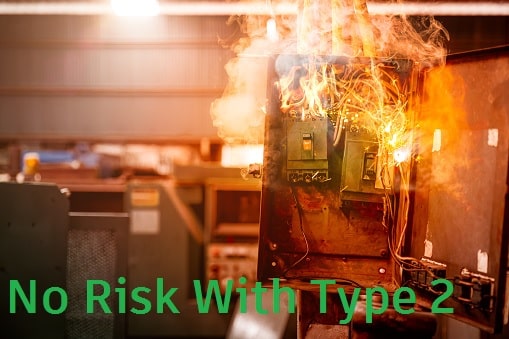
- Less maintenance cost: There is no damage in motor starter and its parts with Type 2 coordination. Though the initial investment cost is higher, but the maintenance cost is lower.
Read Next: