Types of flow meters can be divided into two functional groups on the basis of measurement of quantity & flow rate. The flow meter that measures the quantity is the positive displacement type flow meter. On the other hand, the flow meter that measures the rate of flow is the inferential type flow meter.
Types of Flow Meters
Broadly two types of flow meters are widely used in industries:
- Volumetric Flow meters and
- Mass Flow meters
The primary element of the flow meter has its contact with the fluid, this causes some interaction between the fluid & primary element. The interaction of the primary element with the fluid may acceleration of the fluid flow.
The secondary element of the flow meter converts flows into an electrical signal. Further, we can display the electrical signal in terms of volume, weights, or rates of flow.
For example, the orifice plate along with the pressure pipe & its connection form a primary element. The differential pressure devices such as pressure gauge & transmitter form the secondary element. The secondary element converts the pressure into an electrical signal or in some sort of mechanical indication.
Almost all types of flow meters have the same type of primary and secondary elements.
Positive Displacement Type Flow Meter (Quantity Meters)
A positive displacement flow meter requires mechanical displacement of the fluid to measure the flow. Thus, the positive displacement (PD) flow meters measure the quantity of a moving fluid.
The positive displacement meters are as follows.
- Oval Gear meter
- Nutating disc meter
- Spur gear meter
- Variable area flow meter
- Screw meter
- Oscillating piston meters
- Helical gear meter
- Rotary Vane meter
Inferential Type Flow Meters-Volumetric Flowmeters
Volumetric flow meters got their name because these flow meters measure the fluid volume passing through a specific location in a set period of time. Thus, it provides an instantaneous analog, digital, or pulse output of the volumetric flow rate of the liquid or gas. The followings are the various types of Volumetric Flowmeters.
- Orifice Plate
- Flow Nozzles & Venturi tubes
- Pitot Tubes
- Turbine flow meter
- Swirlmeter
- Vortex shedding Flow meter
- Ultrosonic flow meter
Orifice Plates
Thin-plate & concentric orifice flow meters are Inferential type flow meters. They have their widespread use in industries.
Flow Nozzles & Venturi Tubes
Flow nozzles & venturi tubes types flow meters are the primary flow rate devices. These devices are suitable for measuring more flow than an orifice plate under the same conditions. Therefore, they are suitable for flow measurement at high velocity. A smaller bore nozzle or Venturi is suitable for measuring the same flow if we choose a differential limit.
Pitot Tubes
The pitot tube is a type of flow meter most suitable for measuring fluid flow velocity. The open endpoints upstream so the fluid rams into the opening and increases the pressure inside. That pressure is called the stagnation pressure because the flow stagnates – comes to rest – inside the tube.
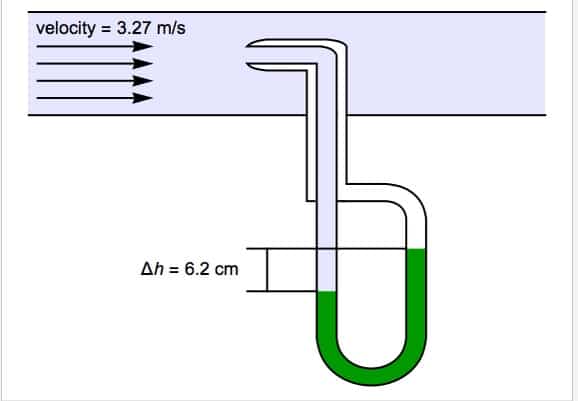
Generally, it is used in the combination with a measurement of the static pressure – the undisturbed pressure in the fluid. The difference between the stagnation pressure and the static pressure is called dynamic pressure.
Turbine Type Flow Meters
A turbine meter has a primary element that rotates by a linear velocity of the fluid stream on immersion of the element in the fluid. The revolution of the primary element is proportional to the rate of fluid flow. The more the revolution, the more the flow.
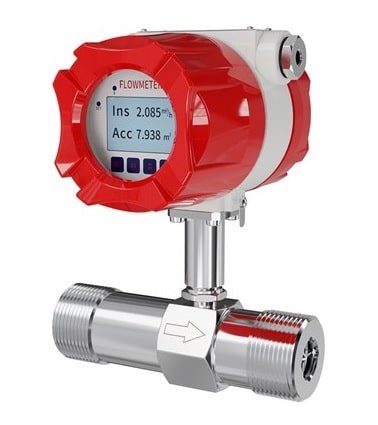
We can use it for the pressure ranges from sub-atmospheric to 6000 psi. They function well for clean fluid.
Swirlmeters Flow Meter
Swirlmeters have their widespread application for flow rate measurement because they have a simple structure, stable operation stability, and accurate measuring precision.
Vortex Shedding Meters
Vortex shedding is caused when a fluid flows past a blunt object. The fluid flow past the object creates alternating low-pressure vortices downstream of the object. Finally, the object will tend to move towards a low-pressure zone.
In the cyclone, the fluid moves in a circular/ spiral motion because of pressure difference. The flow is a type of vortex flow.
Mass Flowmeters
Mass flow meters measure the fluid mass flow rate. There are two types of mass flowmeters.
- Coriolis Mass flowmeter and
- Thermal Mass flowmeters
Read Next:
[url=https://mode-bridge.github.io/]mode bridge[/url] does the job well
solid for swapping, quick and cheap – [url]https://swap-weth.github.io/[/url]
in-depth read explained the kya ai agent fashion grammatically, see [url=https://medium.com/@SemRister/top-5-autonomous-ai-agent-tokens-positioned-for-10x-returns-d839fe3dd583]ai trading[/url] an eye to the details.
[url=https://telegra.ph/How-to-Approve-a-SyncSwap-Swap-Safely-07-31]syncswap[/url] kept more of my trade, low cost and clean
quality write up, it demystifies [url=https://emilypgnc838312.tblogz.com/manta-bridge-how-to-fix-a-missing-transfer-55782571]bridge eth to manta[/url] for anyone new to manta pacific, highly recommend a read
accurate and level headed, the [url=https://honeywnxp791081.blog5.net/96174949/arbitrum-swap-who-should-use-a-dex-or-aggregator]layer 2 swap[/url] troubleshooting resolved my issue, and [url=https://arbswap.live]arbswap[/url] confirmed the fix
accurate and calm, the [url=https://karimorpy984064.blog-ezine.com/43043130/jumper-bridge-costs]jumper bridge[/url] troubleshooting resolved my issue, and [url=https://www.coingecko.com/]crypto prices[/url] confirmed the fix
read this before depositing, the [url=https://deannaxzda592126.blogs100.com/42876987/renzo-staking-which-deposit-route-will-go-through]renzo protocol[/url] points are essential, and [url=https://defillama.com/lst]liquid staking[/url] let me confirm whats backing the token
if youre wondering [url=https://margiecejk734331.amoblog.com/what-changed-in-frax-oft-bridge-support-fip-445-64740755]why did my frax swap fail[/url], read this first, it saved me gas, and check [url=https://coinmarketcap.com/currencies/frax/]frax[/url] to be sure
expert level clarity, it made [url=https://nannieqhcj996528.blogdemls.com/42289007/how-to-use-universal-bridge-without-an-irreversible-mistake]universal bridge[/url] make sense where other guides failed, i sanity checked [url=https://l2beat.com/bridges/summary]cross chain bridges[/url] too
for anyone learning [url=https://albiebzry486974.daneblogger.com/41168928/how-to-recover-an-old-tornadocash-deposit-safely]how onchain privacy works[/url], this is the most useful breakdown, and [url=https://coinmarketcap.com/]crypto prices[/url] rounds out the concepts
the min received and eta on [url=https://jack-kingstom.blogspot.com/2026/08/right-now-lifi-bridge-and-robinhood.html]move crypto cross chain[/url] are accurate, what it shows before signing is what happens
for stablecoin swaps [url=https://www.tumblr.com/defi-news/825280297762504704/spookyswap-in-august-2026-first-swap-guide]boo token[/url] gives me the tightest spread ive found
this colab breaks down how rhino bridge actually routes a transfer. it covers a wide set of chains, including a few that smaller bridges skip. no wrapped asset mess on the other side, what you send is basically what you get [url]https://colab.research.google.com/drive/1sk9AXRrivE70O2n_PhImSYxyMo7djCGG[/url]
honestly this is a clear write up on how it functions. bridging a tiny amount first is smart before you move real size over [url]https://victoradex436511.bloggerswise.com/51349522/the-gnosis-bridge-detail-that-prevents-costly-mistakes[/url]
finally wrapped my head around [url=https://across-bridge.app/]across bridge crypto[/url]
truthfully this is a straightforward read on how it functions. the pricing on arbswap reflects real pool depth so the quote matches the fill. you can write up the details [url=https://sashahhox785109.dgbloggers.com/43006982/when-arbitrum-bridge-is-the-right-move]here[/url]
good down to earth write up, not the typical fluff. renzo gave me eigenlayer exposure without running my own operator. a dependable guide of [url=https://umareglh809408.spintheblog.com/42904298/renzo-staking-the-part-that-matters-when-you-exit]liquid restaking renzo[/url]
dependable breakdown, well worth a quick read before you move funds. fees on universal bridge came in lower than the official bridge for me. shifting funds cross chain with universal bridge still throws users on the destination gas [url]https://sahilvcwg801924.blogsumer.com/41633287/crypto-bridge-liquidity-is-the-real-constraint[/url]
Swap eth made a lot more sense after I wrote down the input token, output token, and expected amount.
I’ve been around crypto long enough to take my time with these swaps, so I checked the final XRP and BNB amounts before sending.
Trust Swap and Uniswap both felt familiar, though I’d always begin with a small test transaction.
Has anyone else notice ParaSwap price estimates changing between the quote screen and the confirmation?
I use Frax Swap by checking the network, selecting the pair, entering a small amount, and only then reviewing slippage.
Manta Bridge seems cheaper for larger transfers in my experience, though I only tried $100 and $250.
Before choosing between XMR Bridge and Changelly, I check the rate, minimum, and expected arrival time. That quick habit has saved me from unhelpful estimates more than once.
Rango’s request form asked for details I already had in my wallet history. I copied them carefully and skipped adding unrelated information.
The omnichain supported chains information answered my question about where to send the token. I also checked the destination network before signing.
Bungee seemed more trustworthy after I saw the transfer appear on the destination side. I still keep limited funds for new services.
The amount after fees matters more to me than a small difference in the advertised rate. Mantle Bridge gave me a clearer picture before I signed.
I look for the connected address on the page because seeing the wrong address usually means I selected the wrong account.
I checked the wallet permissions before completing wormhole bridge login and did not see anything unexpected. The next step was straightforward.
I am normally cautious with bridges, yet this process felt clear. The steps were straightforward, which helped.
The transaction failed after the quote expired, so I refreshed everything before retrying. A new quote and a better fee solved it for me.
I tested a small transfer with and without available energy, and the result was pretty noticeable. Bandwidth was used first, then the energy requirement showed up.
Rango’s status details helped me figure out whether the delay was on the source chain. That is more useful than guessing from a wallet balance.