- Physical Properties Definition: Physical properties are the characteristics of materials that can be observed or measured without changing their chemical composition, such as density, melting point, and conductivity.
- Classification of Properties: Physical properties are classified into intensive properties, which are independent of material size, and extensive properties, which depend on the quantity of material.
- Importance of Intensive Properties: Properties like density, melting point, thermal conductivity, and specific heat capacity determine how materials behave under thermal, electrical, and mechanical conditions.
- Thermal Behavior of Materials: Thermal properties such as specific heat capacity and thermal expansion coefficient are crucial in heat transfer and temperature-sensitive engineering applications.
- Role of Extensive Properties: Extensive properties such as mass, volume, heat capacity, energy, and entropy vary with the amount of material and are important for engineering calculations.
- Material Selection: Understanding physical properties enables engineers to compare materials effectively and select the most suitable material for reliable and efficient engineering applications.
The knowledge of physical properties of engineering materials is essential for selecting suitable materials for a particular application. Different materials are required for different engineering works, and these materials are collectively known as engineering materials. Almost all materials that we observe around us—such as metals, non-metals, polymers, chemicals, fibres, etc.—are engineering materials.
Every engineering material has a specific set of properties that make it suitable for one application or another. These properties are broadly classified into physical properties and chemical properties. In this article, we will discuss the physical properties of engineering materials in detail.
Definition of Physical Properties of Materials
The physical properties of a material are its inherent characteristics that can be observed or measured without altering the identity or chemical composition of the material. Proper knowledge of these properties helps engineers choose the most appropriate material for a specific purpose.
Example: Copper is selected for electrical conductors instead of paper because copper is a good conductor of electricity, whereas paper is a poor conductor. Here, electrical conductivity is the physical property used for comparison.
Types of Physical Properties of Engineering Materials
Physical properties are classified into two main types:
- Intensive Properties
- Extensive Properties
Intensive Properties
Intensive properties are those physical properties that are independent of the size, shape, or amount of material. These properties are also known as bulk properties.
List of Intensive Physical Properties
- Pressure
- Temperature
- Melting Point
- Boiling Point
- Density
- Ductility
- Malleability
- Conductivity
- Toughness
- Thermal Conductivity
- Refractive Index
- Specific Heat Capacity
- Thermal Expansion Coefficient
- Magnetic Susceptibility
Now, let us discuss each intensive physical property in detail.
Pressure
Pressure is defined as the force exerted per unit area on the surface of a material in a direction perpendicular to the applied force. It is an important physical property of materials.

Where:
- P = pressure
- F = applied force
- A = surface area
The unit of pressure is kg/m².
Temperature
Temperature is the quantitative measure of the relative hotness or coldness of a material with respect to its surroundings. It represents the average kinetic energy of the molecules of a substance.
Temperature is measured in Celsius, Fahrenheit, or Kelvin.
The temperature of a material does not depend on its size or volume. For example, whether there is 100 kg of ice or 100 g of ice, it melts at 0°C.
Melting Point
The melting point of a material is the temperature at which it changes from a solid state to a liquid state. Depending on the application, impurities may be added to increase or decrease the melting point of a material.
Impurities introduce defects or additional atoms that affect the melting behaviour.

Boiling Point
The boiling point is the temperature at which a liquid changes into a gaseous state. Similar to the melting point, impurities can alter the boiling point of a material.
Density
Density indicates how closely packed the particles of a material are. It is defined as the mass per unit volume of the material.

Where:
- ρ = density
- m = mass
- V = volume
The SI unit of density is kg/m³.
Ductility
Ductility is the ability of a material to be drawn into thin wires. It indicates the extent to which a material can undergo plastic deformation under tensile stress before failure.
Malleability
Malleability is the property of a material that allows it to be hammered, rolled, or forged into thin sheets without breaking.
Conductivity
Conductivity is a physical property that represents the availability of free electrons in a material. It indicates how easily a material can conduct electricity when a voltage is applied.
Metals are good conductors due to free electrons, while insulators lack free electrons. Materials like silicon, germanium, and gallium arsenide have conductivity between conductors and insulators and are called semiconductors.

Toughness
Toughness is the ability of a material to resist fracture or rupture. It is also defined as the amount of energy a material can absorb before failure. Toughness is a combination of strength and ductility.
Diamond is one of the toughest known materials.

Thermal Conductivity
Thermal conductivity is the ability of a material to conduct heat. Metals have high thermal conductivity, whereas insulating materials have low thermal conductivity.
This property is important in heat transfer and insulation applications.
Refractive Index
The refractive index indicates how light propagates through a material. It depends on the nature of the material and not on its size or quantity, making it an intensive property.
Specific Heat Capacity
Specific heat capacity is defined as the amount of heat required to raise the temperature of unit mass of a material by 1°C. It is denoted by S.
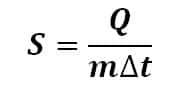
Where,
m is the mass of material in Kg.
Q is the amount of heat given to material in Joule.
Δt is a rise in temperature.
The SI unit of specific heat is J/kg°C.
Thermal Expansion Coefficient
The coefficient of thermal expansion indicates the expansion of a material due to a change in temperature.
Types:
- Linear Expansion (αL) – change in length
- Area Expansion (αA) – change in area
- Volume Expansion (αV) – change in volume
The unit of thermal expansion coefficients is per °C.
Coefficient of Linear Expansion
The change in the length of the material with an increase in temperature is called the coefficient of linear expansion. It is denoted by the letter “αL”
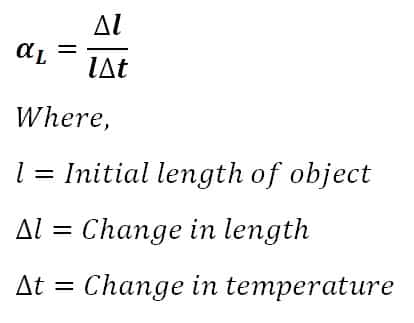
The Unit of αL is per oC.
Coefficient of Area Thermal Expansion
The change in the area of an object because of a change in temperature is called the “Coefficient of Area thermal expansion”. It is denoted by “αA”.
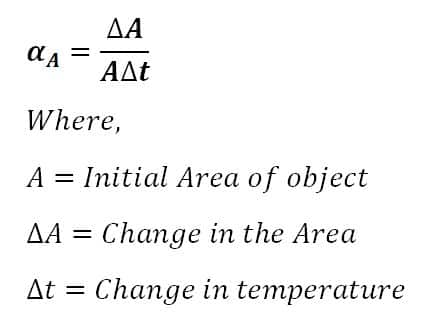
The Unit of αA is per oC.
Coefficient of Volume Thermal Expansion
The change in the volume of the material with a change in the temperature is called the coefficient of volume thermal expansion. It is expressed by the letter “αV”
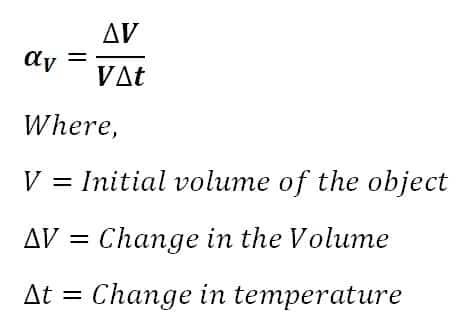
The unit of αV is per oC.
Magnetic Susceptibility
Magnetic susceptibility is the degree to which a material can be magnetized when placed in an external magnetic field. It does not depend on the amount of material.
Extensive Properties
Extensive properties depend on the amount or size of the material present.
List of Extensive Physical Properties
- Mass
- Length
- Volume
- Heat Capacity
- Entropy
- Electric Charge
- Momentum
- Energy
Now, let us discuss each extensive physical property in detail
Mass
Mass is the amount of matter present in a material. It remains constant, while weight varies with gravity.
Length
Length is the measurement of the size or extent of material in one dimension.
Volume
Volume is the amount of space occupied by a material in three-dimensional space. It increases with the quantity of material.
Heat Capacity
Heat capacity is the amount of heat required to raise the temperature of a material by one degree.
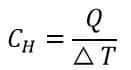
It is measured in cal/°C or J/°C.

Entropy
Entropy is a measure of disorder or randomness in a material. It represents the portion of thermal energy unavailable for useful work.
Electric charge
Electric charge is the property that causes a material to experience force in an electromagnetic field. It depends on the amount of substance.
Momentum
Momentum is the product of mass and velocity. It increases with an increase in the amount of material.
Energy
Energy is the property that enables a material to perform work. It may exist in thermal, chemical, electrical, or mechanical forms.
Physical Properties of Materials – Summary Table
| Category | Physical Property | Brief Description |
| Intensive Properties | Pressure | Force exerted per unit area on the surface of a material |
| Temperature | Measure of the relative hotness or coldness of a material | |
| Melting Point | Temperature at which a solid changes into a liquid | |
| Boiling Point | Temperature at which a liquid changes into a gas | |
| Density | Mass per unit volume of a material | |
| Ductility | Ability of a material to be drawn into thin wires | |
| Malleability | Ability of a material to be hammered into thin sheets | |
| Electrical Conductivity | Ability of a material to conduct electric current | |
| Thermal Conductivity | Ability of a material to conduct heat | |
| Toughness | Ability to absorb energy before fracture | |
| Refractive Index | Measure of how light propagates through a material | |
| Specific Heat Capacity | Heat required to raise unit mass by 1°C | |
| Thermal Expansion Coefficient | Expansion of material due to temperature change | |
| Magnetic Susceptibility | Ability of a material to become magnetized | |
| Extensive Properties | Mass | Amount of matter present in a material |
| Length | Measurement of material extent in one dimension | |
| Volume | Space occupied by a material | |
| Heat Capacity | Heat required to raise temperature of a material | |
| Entropy | Measure of disorder or randomness in a material | |
| Electric Charge | Quantity of electric charge in a material | |
| Momentum | Product of mass and velocity | |
| Energy | Capacity of a material to do work |
Conclusion
The physical properties of engineering materials are inherent characteristics that can be observed without altering the material’s identity. These properties are classified into intensive properties, which are independent of material size, and extensive properties, which depend on the amount of material. Understanding properties such as density, conductivity, thermal behavior, and heat capacity helps engineers compare materials and select the most suitable material for specific engineering applications.

Read Next: