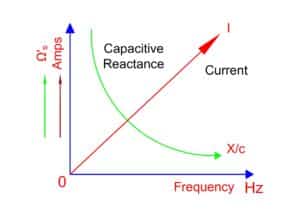
Capacitive Reactance
Capacitive reactance is the opposition offered by a capacitor to the flow of electric current through it. The capacitive reactance depends on the frequency. We
Capacitive reactance is the opposition offered by a capacitor to the flow of electric current through it. The capacitive reactance depends on the frequency. We

The main difference between contactor vs relay is their typical application and switching capability. A contactor is primarily designed for switching electrical power to motors,

In this post, we shall discuss different types of Relays like Latching Relay, Reed Relay, Solid State Relay, Differential Relay, Automotive Relay, Timer Delay Relay,

Link box, a box in which a cable sheath braking system is made. Sheath breaking prevents circulating currents and limits induced voltage in the cable

LVDT and RVDT are electromechanical transducers used to measure displacement and convert it into an electrical signal. LVDT (Linear Variable Differential Transformer) measures linear displacement,

This article describes different types of faults and problems in 3-phase induction motor & their remedies. The induction motor is a very robust, reliable, and
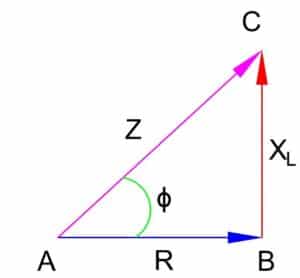
In AC circuit analysis, understanding how different components oppose current flow is essential. The Impedance Triangle provides a simple yet powerful geometric method to visualize

Nominal T model of a medium transmission line has two components- series impedance and shunt admittance. In this post, we shall discuss the nominal T
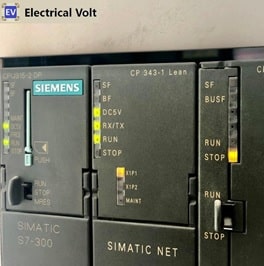
A Programmable Logic Controller (PLC) is a rugged industrial computer designed to automate electromechanical processes in manufacturing and process industries. PLCs are widely used to

Definition-step-up and step-down transformer: Step-up transformer step-up the primary voltage. On the other hand, the step-down transformer step-down the primary voltage. Thus, the secondary side