The main difference between 2-pin vs 3-pin plugs is safety and grounding. 2-pin plugs connect only live and neutral wires and are suitable for low-power devices like fans and chargers. 3-pin plugs include an earth pin for grounding, making them safer for high-power appliances such as refrigerators, air conditioners, and heaters.
Choosing the right plug is crucial for safely connecting electrical appliances. 2-pin vs 3-pin plugs is a common comparison that every homeowner, electrician, or DIY enthusiast should understand. While both types supply power, they differ in design, safety features, and applications. In this guide, we’ll explore the key differences and typical uses of 2-pin and 3-pin plugs.
What is a 2-Pin Plug?
A 2-pin plug is a simple electrical connector with two metal pins – live and neutral – that allow electricity to flow into an appliance. These plugs are commonly used for low-power devices that do not require grounding.
Key Features of 2-Pin Plugs:
- Pins: Live and Neutral
- Safety: No grounding; less safe compared to 3-pin plugs
- Voltage Rating: Usually 220–250V AC
- Current Rating: Typically 2–16A depending on design
- Applications: Used for small household appliances such as mobile chargers, electric fans, lamps, electric shavers, and other double-insulated devices.
Advantages of 2-Pin Plugs:
- Compact and lightweight
- Cheaper manufacturing cost
- Suitable for devices with minimal power consumption
Limitations:
- No earthing, so not ideal for high-power appliances
- Higher risk of electric shock if appliance insulation fails
What is a 3-Pin Plug?
A 3-pin plug includes an additional earth pin along with live and neutral pins. This extra pin provides grounding, which enhances safety by preventing electric shocks in case of a short circuit.
Key Features of 3-Pin Plugs:
- Pins: Live, Neutral, and Earth
- Safety: Earthing ensures protection against electric shock
- Voltage Rating: Usually 220–250V AC
- Current Rating: Typically 5–16A
- Applications: Ideal for high-power appliances like refrigerators, washing machines, air conditioners, heaters, microwaves, and other grounded electrical devices.
Advantages of 3-Pin Plugs:
- Provides grounding for safer operation
- Can handle high-power appliances
- Reduces risk of electrical accidents
Limitations:
- Slightly bulkier than 2-pin plugs
- More expensive to manufacture
Key Differences Between 2-Pin and 3-Pin Plugs
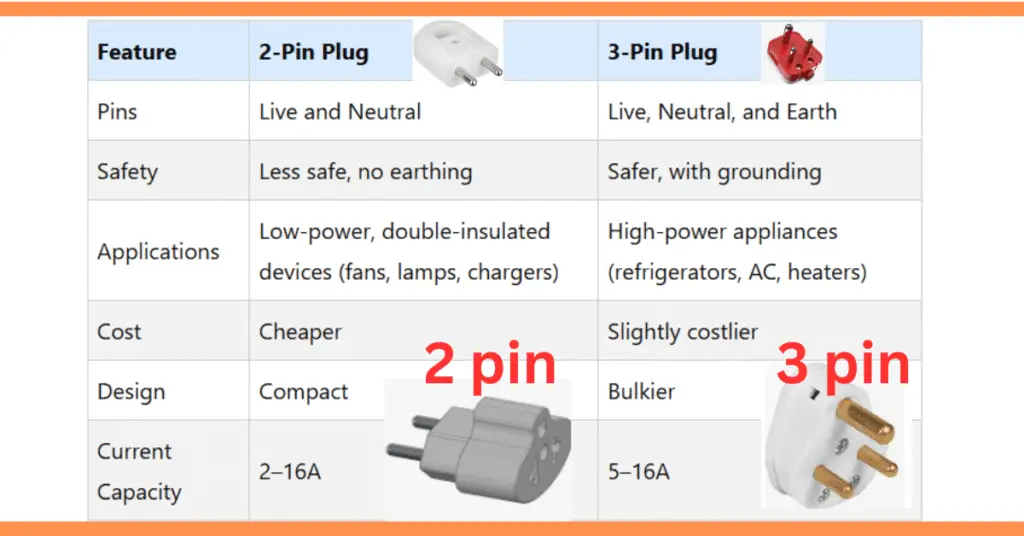
| Feature | 2-Pin Plug | 3-Pin Plug |
| Pins | Live and Neutral | Live, Neutral, and Earth |
| Safety | Less safe, no earthing | Safer, with grounding |
| Applications | Low-power, double-insulated devices (fans, lamps, chargers) | High-power appliances (refrigerators, AC, heaters) |
| Cost | Cheaper | Slightly costlier |
| Design | Compact | Bulkier |
| Current Capacity | 2–16A | 5–16A |
Technical Specifications: 2-Pin and 3-Pin Plugs
| Specification | 2-Pin Plug | 3-Pin Plug |
| Number of Pins | 2 (Live and Neutral) | 3 (Live, Neutral, and Earth) |
| Voltage Rating | 220–250V AC | 220–250V AC |
| Current Rating | 2–16A (depending on design) | 5–16A (depending on design) |
| Pin Material | Brass or copper | Brass or copper |
| Insulation | Plastic insulated sleeves (optional) | Plastic insulated sleeves on live and neutral pins |
| Earthing | Not provided | Provided via earth pin |
| Standard Compliance | IEC 60884-1 / IS 1293 | IEC 60884-1 / IS 1293 |
| Applications | Fans, lamps, chargers, small appliances | Refrigerators, air conditioners, heaters, washing machines |
Why a 3-Pin Plug is Safer Than a 2-Pin Plug
A 3-pin plug is safer because it includes an earth pin along with live and neutral pins:
- Earth Protection: The metal body of appliances is connected to the ground, preventing electric shocks if a fault occurs.
- Fuse Safety: Most 3-pin plugs have a fuse to cut off excessive current, avoiding fire hazards.
- Stable Connection: The earth pin connects first, ensuring safety before electricity flows.
2-pin plugs lack an earth connection, so metal-bodied appliances can become live, increasing the risk of shocks.
The 3-pin plug provides better protection against electric shocks and electrical hazards.
Conclusion
Understanding the difference between 2-pin vs 3-pin plugs is essential for safety and efficiency. While 2-pin plugs are suitable for low-power, double-insulated appliances like fans, chargers, and lamps, 3-pin plugs are designed to handle higher power devices with added safety due to grounding, such as refrigerators, air conditioners, and heaters. Choosing the right plug based on your appliance and usage ensures both longevity of your device and safety for users.
Related Articles: