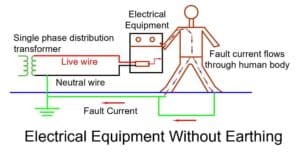
Electrical Earthing- Its Types & Importance
Electrical Earthing is the process of transferring electrical charge to earth with the help of a very low resistance wire. The equipment part that is
Electrical Earthing is the process of transferring electrical charge to earth with the help of a very low resistance wire. The equipment part that is

There are different types of industrial level sensors. The level sensors are used to measure, monitor, and control the level of the storage vessels. It
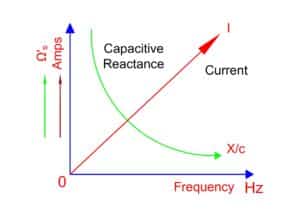
Capacitive reactance is the opposition offered by a capacitor to the flow of electric current through it. The capacitive reactance depends on the frequency. We

The main difference between contactor vs relay is their typical application and switching capability. A contactor is primarily designed for switching electrical power to motors,

In this post, we shall discuss different types of Relays like Latching Relay, Reed Relay, Solid State Relay, Differential Relay, Automotive Relay, Timer Delay Relay,

Link box, a box in which a cable sheath braking system is made. Sheath breaking prevents circulating currents and limits induced voltage in the cable

LVDT and RVDT are electromechanical transducers used to measure displacement and convert it into an electrical signal. LVDT (Linear Variable Differential Transformer) measures linear displacement,

This article describes different types of faults and problems in 3-phase induction motor & their remedies. The induction motor is a very robust, reliable, and
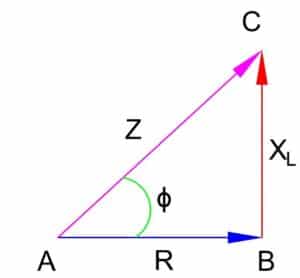
In AC circuit analysis, understanding how different components oppose current flow is essential. The Impedance Triangle provides a simple yet powerful geometric method to visualize

Nominal T model of a medium transmission line has two components- series impedance and shunt admittance. In this post, we shall discuss the nominal T