- Definition of Engineering Materials: Engineering materials are substances used to construct machines and structures, classified into metals, non-metals, and metalloids.
- Classification of Engineering Materials: The classification includes metals, non-metals, polymers, rubbers, ceramics, and metalloids.
- Characteristics of Metals: Metals are usually solid at room temperature, ductile, malleable, and have high electrical and heat conductivity.
- Ferrous and Non-Ferrous Metals: Ferrous metals contain iron and have high permeability, while non-ferrous metals do not contain iron and have low permeability.
- Non-Metals and Other Materials: Non-metals are poor conductors of heat and electricity, brittle, and include gases, polymers, rubbers, ceramics, and other organic materials like wood, leather, and petroleum.
- Metalloids and Semiconductors: Metalloids exhibit characteristics of both metals and non-metals and are semiconductors, widely used in transistors, diodes, and high-frequency switching devices.
- Applications: Understanding the properties and classification of engineering materials ensures proper material selection, improves performance, enhances cost efficiency, and guarantees safe engineering design.
An Engineering material is a material that is used to manufacture or build something of functional importance. The term “Engineering” comes from the Latin word “Ingenium”, which means “Knowledge”. Hence, Engineering materials are the materials that are used to make something by application of knowledge to perform a specific function. Therefore, all materials that we look around are nothing but Engineering materials.
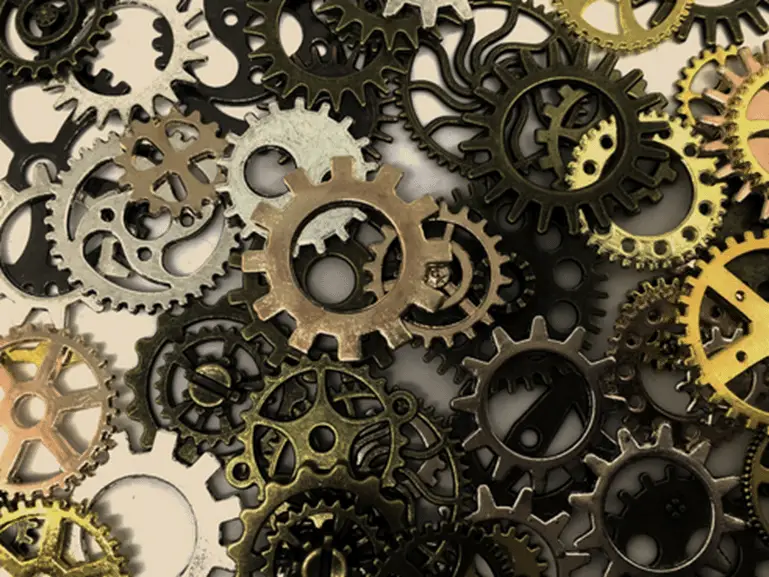
Every material has its own distinguished properties like strength, hardness, elasticity, melting point, boiling point, etc. Knowledge of these properties is applied to select a proper material for any Engineering work. If a single material is not able to provide the required outcome then a mixture of two or more materials is taken into account to get the desired results.
Examples and Applications of Engineering Materials
An example of engineering material is steel which is used in many applications like in the construction of a building, railway tracks, and high-voltage transmission lines. Copper is one of the most important engineering materials that is used in the manufacturing of electrical machines and household appliances. The selection of a particular material for a particular purpose depends on its various properties, availability, and cost.
Basis of Classification of Engineering Materials
Classification of engineering materials can chiefly be done based on the physical properties, chemical composition, and heat and electricity conducting capacity.
Physical Properties of Engineering Materials
Physical properties give us an idea about the outer nature of the material like the weight it can sustain, elasticity, tensile strength, whether the material is ductile and malleable, etc.
Chemical Composition of Engineering Materials
The chemical composition tells us about what the material has at the molecular or atomic level. This helps us to decide what material can be mixed with the given material to get the preferred output. A material having iron content is prone to rust, and in order to avoid rusting we need to know the amount of iron present.
Heat and Electrical Conducting Capacity
Heat or electricity conducting capacity tells us about the level of heat that a material can withstand without melting. This is important for electrical appliances and machines expected to work continuously without thermal runaway.
Classification of Engineering Materials
Engineering materials can be classified as
- Metals
- Non-metals
- Metalloids
Metals
Metals are a category of engineering materials that are known for their specific properties. Metals are solid in nature at room temperature (except Mercury which is considered a liquid metal), have a regular shape, have high electrical and heat conductivity, are ductile and malleable in nature, etc. Metals have a reflective surface.
Examples of metals: Aluminium, Copper, Iron, Gold, Silver, Nickel, etc.
Metals can further be subdivided into two:
- Ferrous metals
- Non-Ferrous metals
This sub-classification of engineering materials is done based on iron content, as iron is one of the most important and commonly used metals in any engineering work. Apart from that, iron has magnetic properties which are unparallel to any other metal, which makes iron one of a kind.
Ferrous metals
Ferrous metals are metals having iron content and they show properties similar to that of iron. These metals have a strong affinity to magnets (high permeability) and hence these metals are used to make the core material of an electrical machine. The core material is used for carrying the magnetic field flux and thus a Ferrous metal is preferred which is ferromagnetic in nature.
Examples of ferrous engineering materials: Wrought Iron, Cast Iron, Silicon Steel, CRGO steel, High-speed steel, etc.
Non-Ferrous Metals
These metals are paramagnetic or diamagnetic in nature and have low permeability, unlike their Ferrous counterpart. These metals have insignificant or no iron content.
Examples: Copper, Gold, Silver, etc.
Non-Metals
Non-metals are materials that are opposite in nature to metals. These materials are poor conductors of heat and electricity in general, are brittle in nature, neither ductile nor malleable, and can be present in solid, liquid, or gaseous states.
Examples of non-metal engineering materials: Carbon, Hydrogen, Oxygen, Selenium, Sulphur, plastics, rubbers, asbestos, etc.
Everything that doesn’t exhibit the characteristics of a metal can be placed under non-metals. Hence there is a long list of things that can be placed under non-metals. Some broader sub-classifications of non-metals are as follows.
Non-metallic Solids
These materials are solid in nature at room temperature although these are non-metals. Elements like Carbon, Selenium, Sulphur, etc. fall under this category. These components are used in various engineering works involving chemical reactions or biological processes.
Non-metallic Gases
Non-metallic gases: Gases like Fluorine (F), Oxygen (O), Nitrogen (N), Hydrogen (H), etc. are important non-metallic gases that are used in various industrial applications. For example, SF₆ circuit breakers are used in power stations to avoid arcing during a fault clearance owing to the property of the SF₆ gas.
Noble Gases
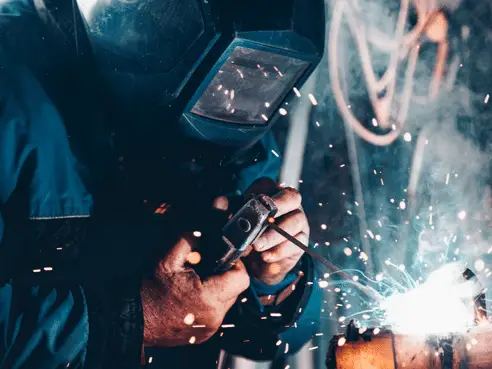
Noble gases include Helium (He), Neon (Ne), Xenon (Xe), Krypton (Kr), Argon (Ar), and Radon (Rn). These gases are non-reactive in nature because of their stable atomic configuration as they have complete electron shells. These gases are also called inert gases and they have wide use in industrial applications. For example, halogen bulbs, lasers, metal refining, welding, etc.
Polymers
Polymers are important non-metallic engineering materials used in a wide range of industrial applications. These elements are large molecules of a repeated chain of Carbon and Hydrogen along with other non-metals like Oxygen and Nitrogen. Polymers are co-valent in nature, unlike metals which are electrovalent. Thus, polymers have no free electrons available for the conduction of electricity.
Polymers provide great resistance to the flow of electric current and allow the flow of current only beyond a certain high voltage known as the breakdown voltage. Hence, polymer like Poly-Vinyl Chloride is used as an insulating material for electrical machines. Polymers are bad conductors of heat as well which makes them perfect heat-insulators.
Some examples of polymers are Poly-tetra Fluro Ethylene (PTFE also known as Teflon), Bakelite (used in making electrical switches), polypropylene, Polystyrene, etc.
Rubbers
Rubbers are a category of polymers that have greater elasticity. Hence these are also called elastomers. Rubbers are used in making tires, gaskets, conveyor belts, and other such materials where elasticity is of utmost importance.
Ceramic Materials
Ceramic materials are inorganic, non-metallic solid materials that are used in a variety of industrial applications. These materials are made of metallic and non-metallic compounds. Ceramics are generally formed by blending clay, earthen matter, oxides, carbides, and silicates. Clay is a common matter in all ceramic materials.
Ceramic materials are known for their hardness and resistance to corrosion. Some commonly produced ceramic materials are glass, porcelain, spark plugs, cutting tools, wear-resistant coatings, etc.
Other Materials
There are other engineering materials like wood, graphite, leather, textile materials, petroleum, etc. which are non-metallic in nature. Graphite is the only non-metal which is a good conductor of electricity because Graphite has delocalized electrons, which means it has free electrons in the Carbon atoms.
Metalloids
Metalloids are materials that exhibit the characteristics of both metals and non-metals. In some places, metalloids are considered within the ambit of non-metals as they don’t show metallic characteristics completely. Metalloids are semiconductors, which means these materials have electrical conductivity between the metals and the non-metals. Semiconductor materials are used in making transistors, diodes, triodes, and electronic chips.
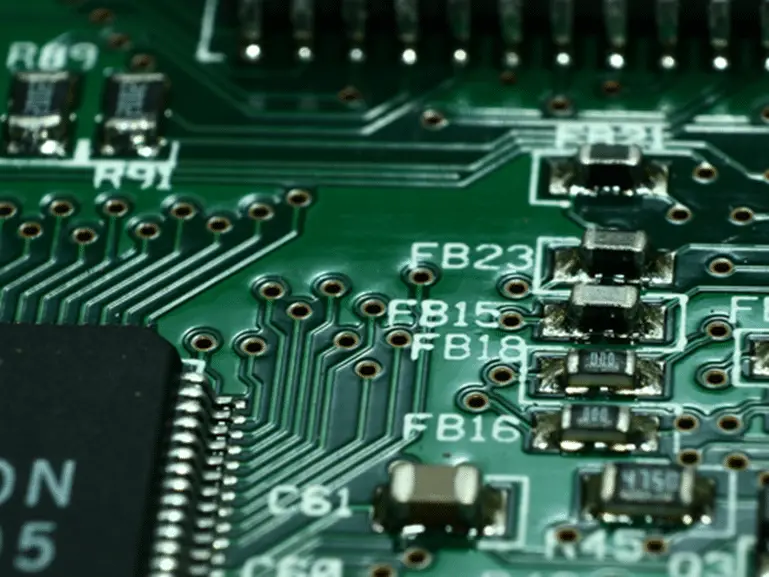
Semiconductor materials are used to make high-frequency switching devices that can start or stop the conduction of electric signals within a small fraction of time, which is not possible mechanically. Typical examples of Metalloids include Silicon, Germanium, Arsenic, Antimony, Boron, etc. Silicon and Germanium are highly used in making semiconductor switching devices.
Conclusion
Engineering materials are the backbone of all engineering applications, as every structure, machine, and device is made using carefully selected materials. The classification of engineering materials into metals, non-metals, and metalloids helps in understanding their physical, chemical, thermal, and electrical properties for proper application.
Metals provide strength and electrical conductivity, non-metals offer insulation and corrosion resistance, while metalloids like silicon and germanium are essential for semiconductor devices and modern electronics. A clear understanding of engineering material classification ensures proper material selection, better performance, cost efficiency, and safe engineering design.
Read Next: