- Purpose of Conduits: Conduits protect and route wires, preventing mechanical damage, moisture, corrosion, fire hazards, and environmental stress while ensuring safety and compliance with electrical codes.
- Types of Conduits: Conduits are classified into metallic, non-metallic, flexible, and special-purpose types, each suited for specific environments like indoor, outdoor, underground, or fire-sensitive areas.
- Metallic Conduits: EMT, IMC, and RMC provide varying levels of mechanical protection. EMT is best for dry indoor locations, IMC for outdoor and industrial use, and RMC for heavy-duty, high-stress installations.
- Non-Metallic Conduits: PVC, ENT, and HDPE are lightweight, corrosion-resistant options. PVC is suitable for underground and wet areas, ENT for concealed indoor wiring, and HDPE for long-distance underground runs.
- Specialty Conduits: LSZH and RTRC serve specialized environments. LSZH ensures fire safety in enclosed public spaces, while RTRC resists chemicals and corrosion in industrial or coastal applications.
- Flexible Conduits: FMC, LFMC, and LFNC offer flexibility for complex wiring paths. FMC is for short indoor connections, LFMC is waterproof for wet locations, and LFNC is a non-metallic alternative for damp or corrosive areas.
- Selection Guidelines: Choose conduits based on environmental exposure, mechanical strength, flexibility, and safety standards. Proper selection ensures durable, safe, and code-compliant electrical installations.
Electrical conduits play a critical role in protecting, routing, and supporting electrical wiring in residential, commercial, and industrial installations. They safeguard conductors from mechanical damage, moisture, corrosion, fire hazards, and environmental stress, ensuring safety, durability, and code compliance.
Electrical conduits are available in metallic and non-metallic forms, each designed for specific conditions such as indoor wiring, underground installations, hazardous locations, or fire-sensitive environments. Selecting the right conduit depends on environmental exposure, mechanical strength, flexibility, and safety requirements.
This article explains the 11 main types of electrical conduits, their features, and where each type is best used.
What is an Electrical Conduit?
An electrical conduit is a protective tube or piping system used to enclose and route electrical wires safely. Conduits reduce the risk of:
- Electric shock
- Fire hazards
- Mechanical damage
- Moisture and chemical corrosion
They also simplify maintenance, upgrades, and cable replacement, making them essential for modern electrical systems.
Types of Electrical Conduits
Electrical conduits are broadly classified into:
- Metallic conduits
- Non-metallic conduits
- Flexible conduits
- Special-purpose conduits
Below are the 11 most commonly used electrical conduit types.
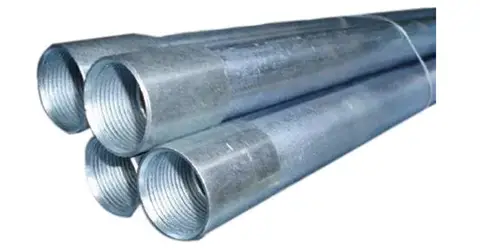
1. EMT Conduit (Electrical Metallic Tubing)
Electrical Metallic Tubing (EMT) is a lightweight, thin-walled conduit made of galvanized steel or aluminum. It can be easily bent using hand or mechanical benders and provides moderate mechanical protection for electrical conductors.
EMT is thinner than rigid metal conduits but still offers adequate strength for most indoor electrical installations.
Usage
EMT is typically used in dry, indoor locations where mechanical protection is required but environmental exposure is minimal.
It is not recommended for outdoor or corrosive environments unless additional protective coatings or fittings are used.
Applicable Projects
EMT is commonly used in:
- Commercial buildings
- Office complexes
- Hospitals
- Shopping malls
- Concealed indoor wiring systems
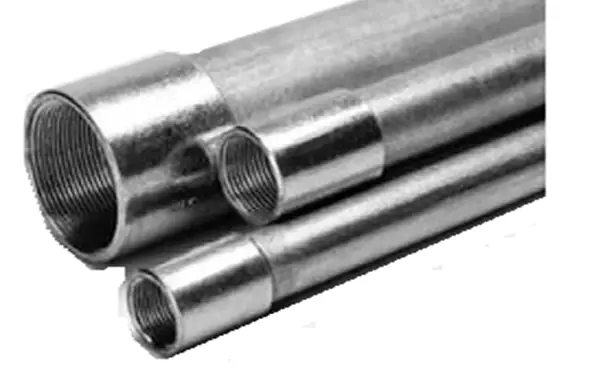
2. IMC Conduit (Intermediate Metal Conduit)
Intermediate Metal Conduit (IMC) is a medium-thickness galvanized steel conduit that provides greater mechanical strength than EMT while being lighter and easier to handle than Rigid Metal Conduit (RMC).
It offers a balanced combination of durability, strength, and ease of installation, making it suitable for more demanding electrical environments.
Usage
IMC is typically utilized in installations that require moderate to high mechanical protection. It is suitable for both indoor and outdoor use and performs well in industrial environments when provided with appropriate corrosion-resistant coatings.
IMC can also be used in underground applications where enhanced protection of conductors is necessary.
Applicable Projects
IMC is commonly used in:
- Industrial electrical installations
- Outdoor wiring systems
- Underground cable routing with corrosion protection
- Facilities requiring stronger conduit than EMT
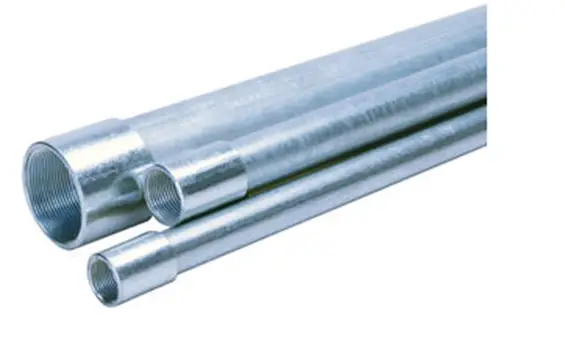
3. RMC Conduit (Rigid Metal Conduit)
Rigid Metal Conduit (RMC) is the strongest and heaviest type of electrical conduit, manufactured from thick-walled galvanized steel or aluminum. It is designed to provide maximum mechanical strength and superior protection for electrical conductors against impact, vibration, and external damage.
Usage
RMC is ideally suited for installations exposed to severe mechanical stress, harsh environmental conditions, and potential physical damage.
It performs reliably in underground and outdoor environments where long-term durability and high safety standards are required.
Applicable Projects
RMC is commonly used in:
- Power plants
- Airports
- Tunnels
- Heavy industrial facilities
- Infrastructure projects requiring maximum cable protection
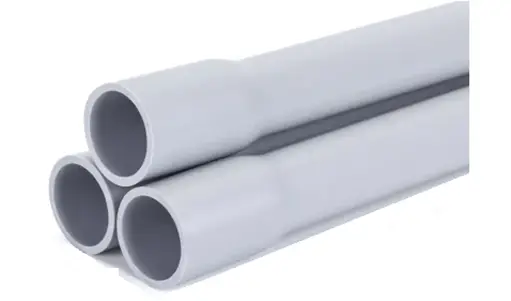
4. PVC Conduit (Rigid PVC Conduit)
PVC conduit is a rigid, non-metallic electrical conduit known for its lightweight construction, excellent corrosion resistance, and cost-effective nature. It is manufactured in various thickness grades and sizes, making it suitable for a wide range of electrical installation requirements.
Usage
PVC conduit is ideal for installations exposed to moisture, damp conditions, and corrosive environments. It is widely used for underground cable routing, concealed wiring, and direct burial applications.
For outdoor installations exposed to sunlight, UV-resistant PVC or additional ultraviolet protection should be used to prevent material degradation.
Applicable Projects
PVC conduit is commonly used in:
- Residential electrical wiring systems
- Underground cable installations
- Moist and damp environments
- Flooring and wall-mounted electrical systems
5. ENT Conduit (Electrical Non-Metallic Tubing)
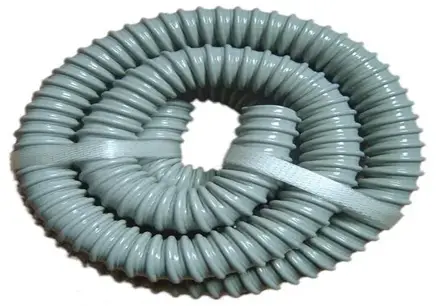
Electrical Non-Metallic Tubing (ENT) is a flexible, corrugated plastic conduit developed for fast and efficient electrical installations. Its lightweight design allows easy routing through building structures, making it ideal for concealed wiring systems.
Usage
ENT is mainly used for concealed electrical wiring inside walls, ceilings, and partitions. It is intended for indoor applications and does not offer adequate protection for outdoor installations or areas exposed to high mechanical stress.
Applicable Projects
ENT conduit is commonly used in:
- Residential buildings
- Schools and educational facilities
- Office buildings
- Wall and ceiling wiring installations
6. HDPE Conduit (High Density Polyethylene)
HDPE conduit is a flexible, high-performance plastic conduit recognized for its excellent impact resistance, durability, and extended service life. Its ability to withstand ground movement and external loads makes it especially suitable for demanding underground applications.
Usage
HDPE conduit is ideal for long-distance underground installations, including direct burial and crossings beneath roads or railway tracks. Its smooth internal surface enables easy pulling of power and communication cables over extended conduit runs.
Applicable Projects
HDPE conduit is commonly used in:
- Underground power cable installations
- Communication and fiber-optic networks
- Road and railway crossing projects
- Medium- and low-voltage underground cable systems
7. LSZH Conduit (Low Smoke Zero Halogen)
Low Smoke Zero Halogen (LSZH) conduit is made from specially formulated non-halogenated compounds that emit minimal smoke and no toxic gases during a fire. This design enhances safety by reducing the risk of smoke inhalation and improving visibility in emergency situations, making it ideal for enclosed or high-occupancy environments.
Usage
LSZH conduit is specifically suited for fire-sensitive areas where occupant safety is a priority. It is commonly installed in enclosed public spaces or critical facilities where fire safety standards must be strictly maintained.
Applicable Projects
LSZH conduits are commonly used in:
- Metro tunnels
- Airports
- Hospitals and healthcare facilities
- Data centers and server rooms
8. RTRC Conduit (Reinforced Thermosetting Resin Conduit)
Reinforced Thermosetting Resin Conduit (RTRC) is a fiberglass-reinforced plastic conduit engineered to provide superior resistance to chemicals, corrosion, and harsh environmental conditions. Its lightweight yet strong construction ensures durability and reliable protection in industrial settings where traditional metal conduits may fail.
Usage
RTRC conduit is ideal for industrial and chemical environments with high exposure to corrosive substances or extreme environmental stress. It combines mechanical strength with ease of installation, making it suitable for demanding applications.
Applicable Projects
RTRC conduit is commonly used in:
- Chemical plants and processing facilities
- Water and wastewater treatment plants
- Coastal and marine installations
- Industrial locations requiring resistance to chemical or corrosive conditions
9. FMC Conduit (Flexible Metal Conduit)
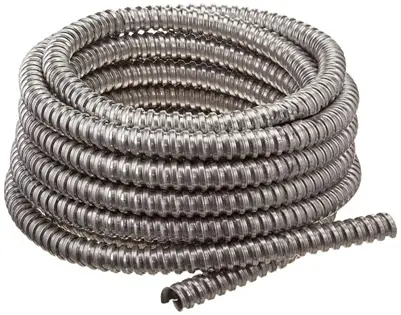
Flexible Metal Conduit (FMC), also known as Greenfield, is a spiral corrugated metal conduit that offers excellent flexibility for routing electrical wiring in areas where rigid conduits are impractical. Its design allows for easy bending and precise installation without additional waterproofing, making it ideal for dry indoor environments.
Usage
FMC is commonly used for short connections between fixed equipment, lighting fixtures, and switchboards. It is best suited for dry, protected indoor locations and is not designed to be liquid-tight.
Applicable Projects
FMC conduit is frequently used in:
- Machinery and industrial equipment connections
- Commercial and industrial lighting installations
- Short indoor equipment wiring runs
10. LFMC Conduit (Liquid-Tight Flexible Metal Conduit)
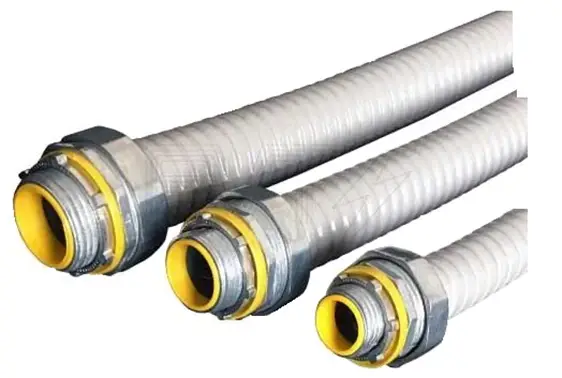
Liquid-Tight Flexible Metal Conduit (LFMC) features a flexible metal core encased in a waterproof outer jacket, providing excellent resistance to moisture, oil, and weather exposure. Its design combines flexibility with robust protection, making it ideal for demanding outdoor and industrial environments.
Usage
LFMC is suitable for installations exposed to water, oil, or harsh weather conditions. It is commonly used for connecting mechanical and electrical equipment where a waterproof and flexible conduit is required.
Applicable Projects
LFMC conduit is widely used in:
- Outdoor electrical and mechanical equipment
- Air-conditioning and HVAC units
- Water pumping and treatment stations
- Rooftop electrical installations exposed to rain or moisture
11. LFNC Conduit (Liquid-Tight Flexible Non-Metallic Conduit)
Liquid-Tight Flexible Non-Metallic Conduit (LFNC) is a flexible, lightweight plastic conduit designed to provide waterproof and corrosion-resistant protection. It serves as a non-metallic alternative to LFMC, combining ease of installation with reliable performance in damp or corrosive environments.
Usage
LFNC is ideal for installations in humid, wet, or corrosive conditions. Its flexible design allows for quick and straightforward routing of electrical wiring while preventing water ingress.
Applicable Projects
LFNC conduit is commonly used in:
- Swimming pool electrical systems
- Agricultural and irrigation installations
- Outdoor HVAC and air-conditioning systems
- Any damp or moisture-prone locations requiring flexible conduit
Comparison of Electrical Conduit Types
| Conduit Type | Material | Flexibility | Best Use |
| EMT | Steel/Aluminum | Low | Indoor commercial |
| IMC | Steel | Low | Outdoor & industrial |
| RMC | Steel/Aluminum | None | Heavy-duty protection |
| PVC | Plastic | Low | Underground & wet |
| ENT | Plastic | High | Concealed indoor |
| HDPE | Plastic | High | Underground long runs |
| LSZH | Plastic | Low | Fire-safe zones |
| RTRC | Fiberglass | Low | Chemical environments |
| FMC | Metal | High | Short indoor connections |
| LFMC | Metal + PVC | High | Wet locations |
| LFNC | Plastic | High | Corrosive outdoor environments |
Conclusion
Choosing the correct electrical conduit depends on environmental conditions, safety regulations, mechanical stress, and installation type.
- EMT and FMC are ideal for indoor dry locations
- RMC, IMC, and LFMC provide superior protection in industrial and outdoor settings
- PVC, ENT, and HDPE are economical solutions for residential and underground wiring
- RTRC and LSZH conduits meet specialized requirements in chemical and fire-sensitive environments
Using the appropriate conduit ensures electrical safety, long system life, and compliance with electrical codes.
Read Next:
- Electrical Wiring, Types, Advantages & Disadvantages
- Common materials used in instrumentation cable
- What is FRP Ladder Type Cable Tray?- Construction, Applications
- Types of Cable Trays: Purpose, Advantages, Disadvantages
- Armored vs. Unarmored Cable: Key Differences
- Classification of Engineering Materials