When it comes to industrial automation, understanding PLC vs RTU is essential. PLC (Programmable Logic Controller) and RTU (Remote Terminal Unit) are two key control devices used to monitor and manage industrial processes. While both play a critical role in automation, they serve different purposes and are designed for distinct environments, making it important to know which device is right for your application.
A PLC is primarily used for high-speed, real-time control of machines and discrete processes inside industrial facilities. An RTU is designed for remote monitoring, data acquisition, and control of geographically distributed systems, typically integrated with SCADA.
In simple terms:
- PLC = Local machine control
- RTU = Remote monitoring and distributed control
This guide explains their differences in detail so you can confidently choose the right system for your application.
What is a PLC?
A Programmable Logic Controller (PLC) is an industrial computer designed to control machinery and processes in real time. It reads inputs from sensors, executes pre-programmed logic, and sends outputs to actuators such as motors, valves, and relays.
PLCs operate using a cyclic scan process:
- Read inputs
- Execute program logic
- Update outputs
- Repeat continuously
This makes PLCs extremely suitable for high-speed automation tasks.
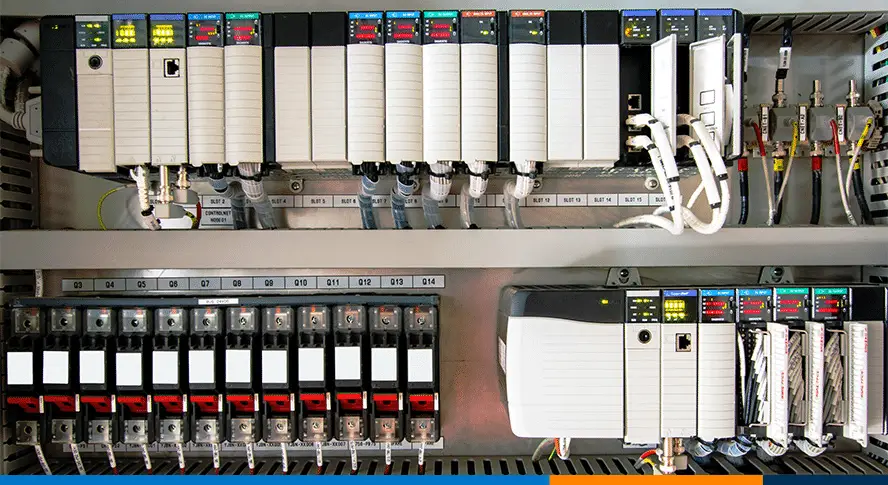
Where PLCs Are Used
PLCs are commonly found in:
- Manufacturing plants
- Assembly lines
- Packaging systems
- Water and wastewater plants
- Oil & gas facilities
- Mining operations
- Pharmaceutical industries
They act as the “workhorse” of industrial automation.
Advantages of PLC
- High processing speed
- Excellent for discrete control
- Easy programming (ladder logic)
- Reliable and durable
- Cost-effective for small/medium systems
- Strong support ecosystem
Advanced PLCs also support:
- Motion control
- PID control
- High-speed counting
- Industrial Ethernet
Disadvantages of PLC
- Limited geographic scalability
- Higher energy consumption
- Limited built-in long-term data logging
- Less suitable for wide-area monitoring
- I/O scalability limitations in very large systems
Read detailed article: PLC: Programmable Logic Controller
What is an RTU?
A Remote Terminal Unit (RTU) is a microprocessor-based device used to monitor and control equipment in remote or geographically distributed locations.
RTUs collect data from field devices and transmit it to a central SCADA (Supervisory Control and Data Acquisition) system for monitoring and analysis.
Unlike PLCs, RTUs are optimized for:
- Low power consumption
- Harsh environments
- Remote communication
- Event-driven data transmission
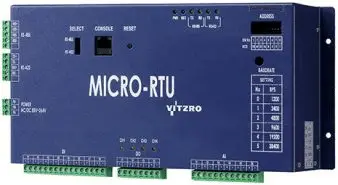
Where RTUs Are Used
RTUs are ideal for:
- Oil & gas pipelines
- Electrical substations
- Renewable energy systems (wind/solar farms)
- Water distribution networks
- Remote pumping stations
- Power distribution systems
They are built to function in extreme temperatures and remote conditions.
Advantages of RTU
- Very low power consumption
- Designed for remote areas
- Strong SCADA integration
- Advanced communication protocols
- Better data logging capabilities
- Large distributed I/O support
Disadvantages of RTU
- Slower processing compared to PLC
- Higher installation cost
- More complex configuration
- Requires specialized expertise
- Limited high-speed discrete control
Key Differences between PLC and RTU: PLC vs RTU
Discrete vs Continuous Processes
One major difference lies in the type of process they control.
PLC – Discrete Processes
PLCs excel in systems with:
- On/off logic
- Defined sequences
- Clear start/stop operations
Example:
- Conveyor belts
- Bottling plants
- Packaging machines
RTU – Continuous Processes
RTUs are better suited for:
- Continuous monitoring
- Distributed assets
- Large-area systems
Example:
- Pipeline pressure monitoring
- Water treatment plants
- Power grid substations
Centralized vs Distributed Architecture
PLCs are typically used in centralized control systems, where all equipment is located in one facility.
RTUs are used in distributed control systems, where devices are spread across wide geographic areas.
In many modern industrial systems, a hybrid architecture is used:
- PLC controls local operations
- RTU communicates system-wide data
- SCADA supervises everything
Performance and Reliability Comparison
Processing Speed:
PLCs are generally faster and designed for millisecond response times.
RTUs prioritize communication stability over speed.
Reliability:
Both systems are highly reliable, but:
- PLCs are simpler and often easier to troubleshoot
- RTUs are ruggedized for extreme environments
Modern RTUs now offer performance approaching PLC levels, but PLCs remain superior for high-speed machine automation.
Connectivity and Communication Protocols
PLC Communication:
- Modbus
- Ethernet/IP
- Profibus
- Profinet
- CAN
PLCs typically connect to:
- HMIs
- Other PLCs
- Local industrial networks
RTU Communication:
RTUs are designed for SCADA environments and support:
- DNP3
- IEC 60870-5-101/104
- Modbus TCP
- Satellite or cellular communication
RTUs often support:
- Remote access
- Wide-area networking
- Alarm transmission
Programming and Configuration Differences
PLC Programming:
Common languages:
- Ladder Logic
- Function Block Diagram
- Structured Text
PLCs are typically programmed using vendor software and are easier for technicians to configure.
RTU Programming:
RTUs may use:
- IEC 61131-3 languages
- Proprietary tools
- Remote configuration software
RTUs require more advanced configuration knowledge due to communication complexity.
Cost Analysis: PLC vs RTU
Initial Investment:
PLCs:
- Lower initial cost
- Widely available
- Ideal for small/medium systems
RTUs:
- Higher initial investment
- More communication hardware
- Designed for large-scale infrastructure
Installation & Configuration Cost
PLCs:
- Easier installation
- Less specialized labor
RTUs:
- Complex configuration
- Communication setup increases cost
Operational Cost
PLCs:
- Higher power consumption
- Moderate maintenance
RTUs:
- Lower energy consumption
- Reduced long-term operating cost in remote areas
Upgrade & Expansion
PLCs:
- Easier to expand within a facility
RTUs:
- Expansion may require additional communication modules
Maintenance and Support Comparison
PLC Maintenance:
- Easier diagnostics
- Standardized components
- Simpler firmware updates
RTU Maintenance:
- Requires communication expertise
- Firmware updates more complex
- Specialized diagnostic tools
PLCs are generally easier for plant technicians to maintain.
I/O Scalability Comparison
PLCs:
- Limited number of I/O points per unit
- Expansion modules required
RTUs:
- Designed for distributed I/O
- Can handle large-scale monitoring networks
For massive infrastructure systems, RTUs scale better.
When to Choose a PLC
Choose PLC if:
- You need real-time high-speed control
- Your system is centralized
- You operate manufacturing equipment
- Motion control or PID control is required
- Fast troubleshooting is important
When to Choose an RTU
Choose RTU if:
- Equipment is spread over large areas
- SCADA integration is essential
- Power supply is limited
- Remote monitoring is required
- Data logging and telemetry are priorities
PLC vs RTU – Comparison Table
| Feature | PLC | RTU |
| Full Form | Programmable Logic Controller | Remote Terminal Unit |
| Primary Function | Machine/process automation | Remote monitoring & control |
| Typical Use | Factories, assembly lines | Pipelines, substations, utilities |
| Process Type | Discrete processes | Continuous/distributed processes |
| Architecture | Centralized | Distributed |
| Control Method | Cyclic scan-based | Event-driven |
| Processing Speed | Very high | Moderate |
| Power Consumption | Higher | Low (can run on solar/battery) |
| Communication | Industrial networks | SCADA protocols (DNP3, IEC 60870) |
| Programming | Ladder, FBD, Structured Text | IEC languages + proprietary tools |
| I/O Capacity | Moderate | Large distributed I/O |
| Data Logging | Limited | Advanced logging |
| Cost | Lower initial | Higher initial |
| Maintenance | Easier | More specialized |
| Best For | Manufacturing | Utilities & infrastructure |
Can PLC Replace RTU?
In some small systems, yes.
But for large distributed infrastructure, RTUs are better suited due to communication capabilities.
Can RTU Replace PLC?
Not for high-speed machine automation.
RTUs are not ideal for millisecond-level discrete control.
Final Decision Framework
Ask yourself:
- Is the system centralized or distributed?
- Do I need high-speed discrete control?
- Is SCADA integration mandatory?
- Is power availability limited?
- What is the total lifecycle cost?
Your answers determine the right solution.
Conclusion
PLCs and RTUs are both critical components in industrial automation, but they serve different roles.
- PLC = High-speed machine automation
- RTU = Remote monitoring and distributed control
PLCs are ideal for factories and discrete processes.
RTUs are better suited for infrastructure and geographically dispersed systems.
Choosing the right device depends on speed requirements, architecture, cost considerations, and communication needs.
By understanding PLC vs RTU differences, you can confidently select the most efficient and cost-effective solution for your industrial automation project.
Frequently Asked Questions
No. While both are controllers, RTUs are optimized for remote data acquisition and communication.
PLCs are generally faster.
For small systems → PLC.
For large distributed systems → RTU may be more economical long-term.
Yes. Many modern systems use both.
Read Next: